




1. Understanding Payment Gateways
Payment gateways are online services that process credit card, debit card, and other forms of electronic payments for e-commerce websites. They act as intermediaries between merchants and financial institutions, securely transmitting payment information from customers to banks and ensuring that the transaction is authorized and completed.
For subscription-based services, payment gateways play a vital role in managing recurring payments. These gateways not only handle the initial transaction but also manage subsequent automatic payments, ensuring that customers are billed accurately and subscription-based services on time without needing to re-enter payment details.
2. Initial Payment Setup
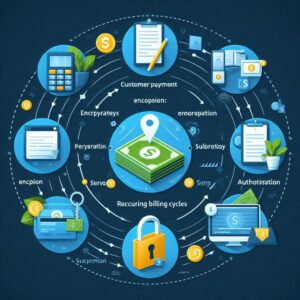
When a customer subscribes to a service, they usually enter their payment details during the checkout process. The payment gateway securely captures this information and performs several critical functions:
- Encryption: The payment gateway encrypts the customer’s payment data to protect it from potential cyber threats.
- Authentication: The gateway verifies the validity of the payment method, ensuring that the card or bank account details provided by the customer are correct.
- Authorization: The gateway requests authorization from the customer’s bank or payment provider to confirm that the transaction can proceed.
Once these steps are completed, the payment is processed, and the customer’s subscription is activated.
3. Managing Recurring Payments
One of the most significant challenges for subscription-based services is managing recurring payments. Payment gateways facilitate this by storing customer payment information securely and automating the billing process. This automation involves several key components:
- Tokenization: Instead of storing the customer’s actual card details, the payment gateway creates a unique token that represents the payment information. This token is used for future transactions, reducing the risk of data breaches.
- Billing Cycles: The payment gateway manages the timing of recurring payments based on the subscription plan. Whether the billing is monthly, quarterly, or annually, the gateway ensures that payments are collected according to the agreed schedule.
- Retries and Failures: If a payment fails (due to insufficient funds, expired cards, etc.), the payment gateway can automatically retry the transaction after a set period. It can also notify the customer to update their payment details.
4. Handling Upgrades, Downgrades, and Cancellations
Subscription-based services often offer flexibility for customers to upgrade, downgrade, or cancel their plans. Payment gateways need to accommodate these changes seamlessly.
- Upgrades: When a customer upgrades their subscription, the payment gateway adjusts the billing amount and schedule accordingly. In some cases, it may even pro-rate the charges based on the time left in the current billing cycle.
- Downgrades: Similarly, downgrading a plan requires the payment gateway to adjust future billing amounts. Some services may also offer refunds or credits for downgrades, which the gateway handles.
- Cancellations: Upon cancellation, the payment gateway stops further billing and may process any refunds if applicable. It also needs to ensure that the cancellation is logged and the subscription services are terminated at the end of the billing cycle.
5. Security and Compliance
Security is paramount when handling recurring payments. Payment gateways must comply with industry standards, such as the Payment Card Industry Data Security Standard (PCI DSS), to protect customer data. This compliance includes using encryption, tokenization, and secure authentication methods to prevent unauthorized access to sensitive information.
Additionally, payment gateways must adhere to regional regulations, such as the General Data Protection Regulation (GDPR) in Europe, which governs how customer data is handled and stored.
6. Reporting and Analytics
Subscription-based services benefit from the detailed reporting and analytics features provided by payment gateways. These tools offer insights into customer behavior, payment trends, and revenue streams. Businesses can use this data to optimize their pricing strategies, reduce churn, and enhance customer satisfaction.
- Revenue Tracking: Payment gateways provide real-time data on revenue, helping businesses track their financial performance.
- Customer Insights: Analytics can reveal patterns in customer behavior, such as preferred payment methods, average subscription durations, and churn rates.
- Transaction History: Businesses can access detailed transaction histories, making it easier to manage customer accounts and resolve disputes.
Conclusion
Payment gateways are integral to the success of subscription-based services, handling everything from initial payment processing to managing recurring billing cycles. By ensuring secure transactions, accommodating changes in subscription plans, and providing valuable insights through analytics, payment gateways help businesses maintain steady revenue streams and deliver seamless customer experiences.