


Introduction
In today’s fast-paced digital economy, having a merchant account is not just a convenience—it’s a necessity. Whether you’re running a physical store, an online shop, or offering subscription services, your ability to accept credit and debit card payments can directly impact your business’s success. But choosing the wrong merchant account can lead to costly fees, delayed payments, and security vulnerabilities.
A merchant account is a specific type of bank account that allows your business to accept and process electronic payment transactions. However, with a wide range of providers and features on the market, choosing the right merchant account for your business can be overwhelming.
This guide will walk you through everything you need to know about how to choose the best merchant account for your business in 2025, from understanding what a merchant account is to evaluating the top providers in the market.
What Is a Merchant Account and Why Do You Need One?
Definition and Core Function
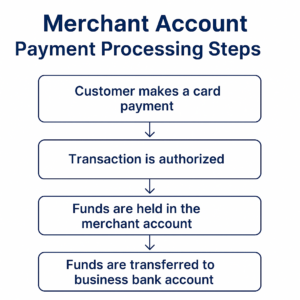
A merchant account is a type of business account that enables you to accept card payments. When a customer pays with a credit or debit card, the transaction is first authorized, then funds are held in your merchant account before being transferred to your business bank account.
How Merchant Accounts Work in Payment Processing
Merchant accounts work in tandem with payment gateways and processors to complete transactions. Here’s how:
- Customer initiates payment.
- Payment processor routes the transaction.
- Issuing bank approves or declines.
- Merchant account holds funds.
- Settlement occurs to your business bank account.

Types of Businesses That Need a Merchant Account
- E-commerce stores needing to accept online card payments
- Retail stores using POS systems
- Subscription-based services that rely on recurring billing
- High-risk businesses like travel, CBD, or adult industries
Key Factors to Consider When Choosing a Merchant Account
Transaction and Monthly Fees
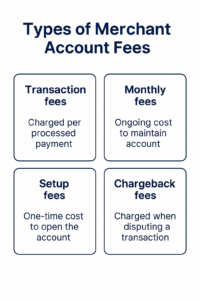
Understanding fee structures is crucial. Common fees include:
- Setup fees: One-time charges to create your account.
- Monthly minimums: The minimum transaction value your account must process monthly to avoid extra charges. This can impact low-volume businesses negatively.
- Transaction fees: Typically a fixed fee plus a percentage per transaction.
- Chargeback fees: Fees applied when a customer disputes a transaction.
- PCI compliance fees: Fees to ensure your systems follow PCI DSS guidelines for data security.

Contract Terms and Flexibility
Avoid providers that lock you into long-term contracts with steep early termination fees. Look for:
- Month-to-month options
- No cancellation penalties
Payment Methods Supported
Ensure your merchant account supports:
- Credit and debit cards
- Digital wallets like Apple Pay and Google Pay
- ACH and eChecks
- Recurring payments
Processing Speed and Settlement Times
Fast deposits are vital for cash flow. Most providers offer:
- Next-day funding
- 1-3 day settlement
Customer Support and Technical Reliability
Payment interruptions can hurt your sales. Opt for:
- 24/7 customer support
- Strong uptime guarantees
- Responsive tech support
PCI Compliance: What It Means and Why It Matters
PCI DSS (Payment Card Industry Data Security Standard) is a set of security standards designed to ensure all companies that accept, process, store, or transmit credit card information maintain a secure environment. There are four levels of PCI compliance based on transaction volume. Providers typically assist with compliance through tools and self-assessment questionnaires.
Understanding the Different Types of Merchant Accounts
Aggregated vs Dedicated Merchant Accounts
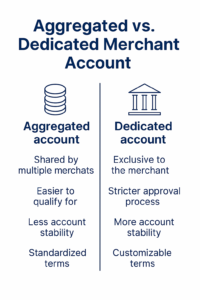
- Aggregated accounts (e.g., Square, Stripe): Shared with other merchants, easier to set up, higher risk of account holds.
- Dedicated accounts: Tailored to your business, more control, better for higher-volume sales.
High-Risk Merchant Accounts
If your business is considered high-risk, look for:
- Providers specializing in high-risk industries
- Higher fees but more lenient underwriting
- Chargeback management tools
- Specialized fraud protection features
- Access to multiple acquiring banks to reduce account instability
Common high-risk industries include:
- CBD and nutraceuticals
- Adult services
- Travel and ticketing
- Subscription billing
These businesses often face more scrutiny, delayed approvals, and higher reserves, so it’s crucial to choose a provider experienced in this space.
How to Evaluate Merchant Account Providers
Questions to Ask Before You Sign Up
- What are all the fees (including hidden ones)?
- What fraud prevention tools are included?
- Is there a monthly minimum?
- How long is the contract?
Comparing the Top Merchant Account Providers (2025)
| Provider | Best For | Monthly Fees | Transaction Fees | Payout Time | High-Risk Support |
| Stripe | Online Startups | $0 | 2.9% + $0.30 | 2 days | No |
| PayPal | Freelancers/Small Biz | $0 | 2.59% + $0.49 | 1-2 days | No |
| Square | In-store Retail | $0 | 2.6% + $0.10 | Next day | No |
| Helcim | Transparent Pricing | $0 | Interchange + 0.25% | 1-2 days | No |
| Authorize.Net | Advanced Customization | $25 | 2.9% + $0.30 + $0.10 | 1-3 days | Limited |
| PaymentCloud | High-Risk Businesses | Varies | Varies | 2-4 days | Yes |
Factors Specific to Your Business
When choosing a merchant account, consider your unique business characteristics:
- Industry type: Certain industries are categorized as high-risk.
- Transaction volume: Higher volumes may benefit from lower per-transaction fees.
- Average ticket size: Smaller tickets may be more sensitive to fixed fees.
- Sales channels: Online, offline, or both?
- Recurring billing needs: Essential for subscription-based businesses.
These factors will influence the ideal fee structure, fraud protection level, and required integrations.
Merchant Account Setup Checklist for Businesses
Documents You’ll Need
- Business license or incorporation documents
- EIN (Employer Identification Number)
- Business bank account details
- Valid ID of the business owner
Steps to Get Approved Quickly
- Organize your documentation.
- Maintain a good credit score.
- Be honest during the application.
- Choose a provider suited to your risk profile.
Common Mistakes to Avoid When Choosing a Merchant Account
Overlooking Fees in the Fine Print
Many providers advertise low rates but hide fees in the contract. Always read the full agreement.
Not Considering Scalability and Growth
As your business grows, you may need advanced features like multi-currency support or custom integrations. Choose a merchant account that grows with you.
Choosing Based on Price Alone
The cheapest option may lack crucial features or offer poor support. Balance cost with functionality and reliability.
Related Reading: What Is a Merchant Account? A Simple Tech Guide
Conclusion: Choosing the Best Merchant Account for Your Business in 2025
Choosing the right merchant account is a foundational decision for your business. From understanding the different account types to evaluating fees and support, every step matters. Take the time to assess your unique needs and compare providers based on cost, flexibility, and service.
With the right approach, your merchant account won’t just process payments—it will support your growth, enhance customer satisfaction, and strengthen your financial operations.
Ready to find your perfect match? Compare top-rated merchant account providers on TheFinRate and make a confident, data-driven choice.
Frequently Asked Questions (FAQs)
1. What is a merchant account and how does it differ from a business bank account?
Answer:
A merchant account is a type of business account that enables you to accept and process electronic payments such as credit and debit cards. Unlike a regular business bank account, which holds all types of business funds, a merchant account temporarily holds payment transactions before transferring the money to your primary business account. It acts as a bridge between the payment processor and your bank.
2. How do merchant account providers charge fees?
Answer:
Merchant account providers typically charge multiple types of fees, including:
- Setup fees
- Monthly minimums or service fees
- Transaction fees (fixed + percentage)
- Chargeback fees
- PCI compliance fees
Fee structures vary widely, so it’s critical to review each provider’s pricing model in detail.
3. What are the different types of merchant accounts available?
Answer:
The main types include:
- Aggregated merchant accounts (e.g., Stripe, Square) – shared across multiple merchants.
- Dedicated merchant accounts – tailored exclusively to your business.
- High-risk merchant accounts – designed for businesses in regulated or chargeback-prone industries.
4. What are the most important fees to look out for when choosing a merchant account provider?
Answer:
Focus on:
- Transaction fees
- Monthly minimums (especially for small businesses)
- Hidden fees (e.g., statement, gateway, or cancellation fees)
- Chargeback and PCI compliance fees
Reading the contract’s fine print can help you avoid unexpected charges.
5. What are the typical contract lengths for merchant accounts, and are there cancellation fees?
Answer:
Some providers offer month-to-month contracts, while others may require 1- to 3-year terms. Always check:
- Whether there are early termination fees
- Whether the contract auto-renews
- If there’s a trial period or satisfaction guarantee
Opting for flexible contracts is generally safer for growing businesses.
6. What payment methods can I accept with a merchant account?
Answer:
A comprehensive merchant account should allow acceptance of:
- Credit and debit cards (Visa, MasterCard, etc.)
- Digital wallets (Apple Pay, Google Pay)
- ACH payments and eChecks
- Recurring billing for subscription-based models
7. What security features should I look for in a merchant account provider?
Answer:
Look for providers that offer:
- PCI DSS compliance
- Tokenization and encryption
- Fraud prevention tools
- Chargeback management systems
These features help safeguard your business and customer data.
8. How important is customer support when choosing a merchant account?
Answer:
Very important. Payment disruptions can directly impact sales, so choose a provider with:
- 24/7 customer support
- Dedicated account managers
- Quick response times
- Strong uptime SLAs
9. Should I choose a flat-rate, tiered, or interchange-plus pricing model for my merchant account?
Answer:
- Flat-rate: Simple to understand, great for low-volume businesses (e.g., 2.9% + $0.30 per transaction)
- Tiered: Can be opaque and more expensive, with varying rates for different card types
- Interchange-plus: Most transparent and scalable, better for medium-to-high volume merchants
10. What is PCI DSS compliance, and is my business required to meet these standards?
Answer:
PCI DSS (Payment Card Industry Data Security Standard) outlines best practices for securing cardholder data. If your business accepts, stores, or transmits card payments, you are legally required to be PCI compliant to avoid penalties and reduce the risk of data breaches.
11. What are the common security risks associated with merchant accounts and payment processing?
Answer:
Key risks include:
- Fraudulent transactions
- Data breaches
- Chargeback abuse
- Phishing and malware attacks
A good merchant account provider should actively help you mitigate these through monitoring tools and built-in security protocols.
12. What are the pros and cons of using a payment aggregator (like PayPal or Stripe) versus a dedicated merchant account?
Answer:
| Payment Aggregator (e.g., Stripe) | Dedicated Merchant Account |
| Easy setup and fast onboarding | Custom setup and underwriting |
| No monthly fees for many plans | May include monthly or setup fees |
| Higher transaction fees | Lower fees for high-volume businesses |
| Limited control over processing | More control and customization |
| Risk of sudden account holds | Stable, especially for high-risk industries |
Startups often begin with aggregators but migrate to dedicated accounts as they scale.
13. What are the specific considerations for high-risk businesses needing a merchant account?
Answer:
High-risk businesses (e.g., CBD, travel, gambling) should:
- Work with specialized high-risk merchant account providers
- Expect higher fees and stricter underwriting
- Ensure robust fraud prevention and chargeback tools
- Choose providers that understand industry-specific regulations
14. What documentation do I need to apply for a merchant account?
Answer:
Common requirements include:
- Business license or incorporation certificate
- EIN (Employer Identification Number)
- Valid government ID (owner)
- Voided business check or bank account details
- Processing history (if applicable)
15. What questions should I ask a merchant services provider before signing a contract?
Answer:
Ask these critical questions:
- What fees will I be charged (including hidden ones)?
- Are there monthly minimums or volume requirements?
- What are the contract terms and cancellation policies?
- Is your company PCI compliant?
- What fraud prevention tools are included?
- Do you offer 24/7 customer support?
- How long does it take to settle funds into my account?