


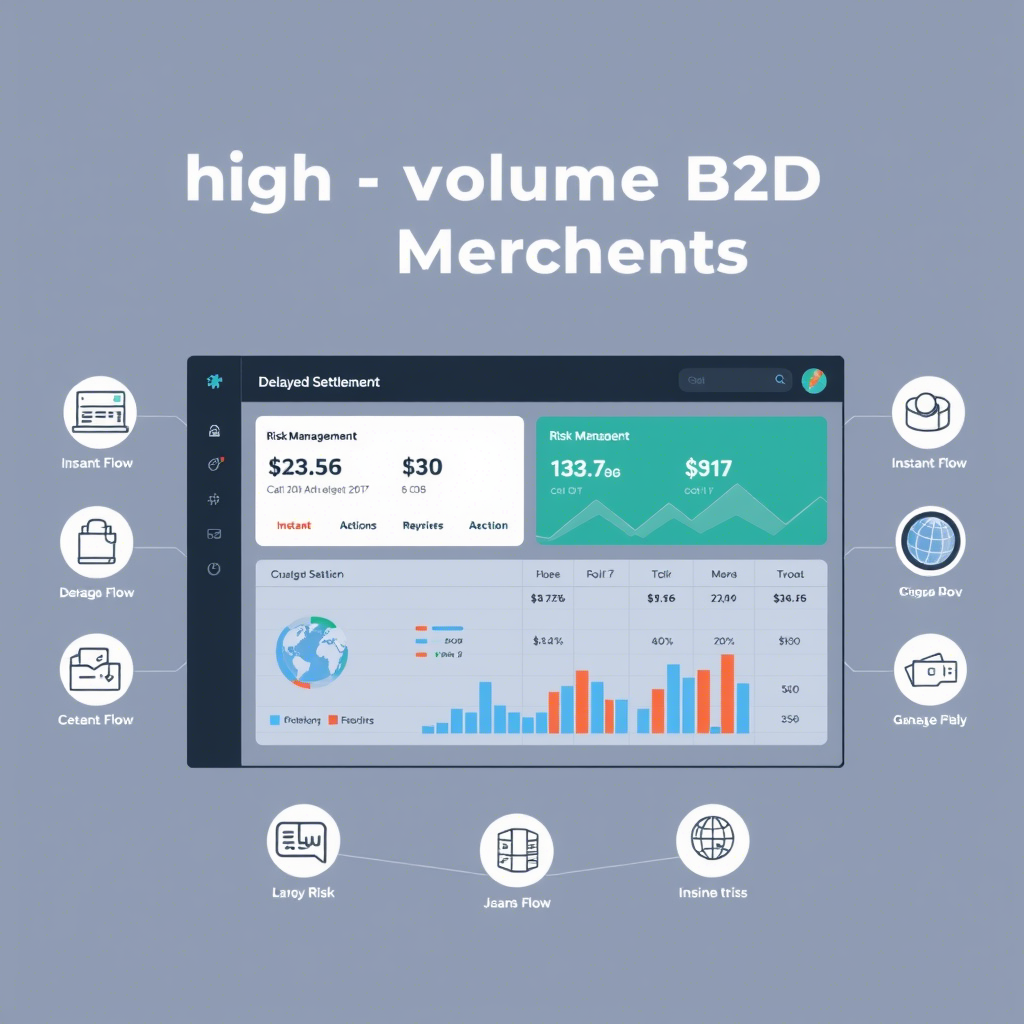
Instant or Delayed Settlements? Finding the Perfect Fit for High-Volume B2B Merchants( Settlement Models )!
In today’s fast-paced business landscape, settlement timelines play a critical role in determining the financial health and operational efficiency of high-volume B2B merchants. These businesses often process thousands of transactions daily, making it essential to choose between instant settlements —where funds are deposited almost immediately—or delayed settlements , where funds are released after a specific period. Each option has its own advantages and challenges, depending on cash flow needs, transaction risks, and operational priorities. But how do high-volume B2B merchants decide which settlement model works best for their business? Let’s explore.
What Are Instant and Delayed Settlements?
- Instant Settlements:
Funds are transferred to the merchant’s account within minutes or hours of the transaction, ensuring quick access to working capital. This is ideal for businesses that need immediate liquidity.“Instant settlements = instant cash flow—perfect for urgent needs.”
- Delayed Settlements:
Funds are held by the payment processor for a set period (e.g., 1–5 business days) before being transferred to the merchant. This model allows for risk assessment and reduces exposure to chargebacks or disputes.“Delayed settlements = reduced risk—a safer bet for long-term stability.”
For example, a logistics company processing bulk payments might prefer instant settlements to meet payroll deadlines, while a SaaS provider may opt for delayed settlements to manage subscription-based revenue more effectively.
Why Settlement Timelines Matter for High-Volume B2B Merchants
For high-volume B2B merchants, settlement timelines directly impact cash flow, risk management, and customer relationships. Choosing the wrong model can lead to liquidity shortages, increased financial risks, or even strained partnerships with suppliers and clients.
“The right settlement model = the right foundation for growth.”
Imagine a wholesale distributor relying on timely settlements to pay suppliers. If settlements are delayed, the business could face disruptions in inventory procurement, leading to missed opportunities and unhappy customers.
Advantages of Instant Settlements
- Improved Cash Flow:
Immediate access to funds ensures businesses can meet short-term obligations like payroll, supplier payments, or restocking inventory.“No waiting games—instant settlements keep operations running smoothly.”
- Customer Trust:
Faster payouts build confidence among clients, especially in industries where speed is crucial. - Operational Agility:
Businesses can respond quickly to market demands, such as scaling operations or investing in growth opportunities. - Global Competitiveness:
Instant settlements enable businesses to compete globally by offering faster, more reliable payment options.
Advantages of Delayed Settlements
- Risk Mitigation:
Holding funds for a few days allows processors to assess potential risks, such as chargebacks or fraudulent transactions.“Delayed settlements = peace of mind—minimize risks, maximize security.”
- Cost Efficiency:
Some payment processors offer lower fees for delayed settlements, making them a cost-effective choice for businesses with stable cash flow. - Stable Financial Planning:
Predictable settlement schedules help businesses forecast cash flow more accurately. - Regulatory Compliance:
Delayed settlements provide time to verify compliance with regional laws and anti-money laundering regulations.
Challenges of Instant vs. Delayed Settlements
- Instant Settlements:
- Higher Fees: Processors often charge premiums for expedited settlements.
- Increased Risk: Faster payouts leave less room for fraud detection and dispute resolution.
“Speed comes at a price—balance convenience with caution.”
- Delayed Settlements:
- Cash Flow Gaps: Delays can create temporary liquidity shortages, impacting day-to-day operations.
- Customer Dissatisfaction: Clients may prefer faster payouts, especially in competitive industries.
“Safety first—but delays can test patience and partnerships.”
What Works Best for High-Volume B2B Merchants?
The choice between instant and delayed settlements depends on the unique needs of the business:
- Opt for Instant Settlements If:
- You operate in industries requiring rapid cash flow, such as logistics, manufacturing, or e-commerce.
- Your clients demand fast payouts to maintain trust and loyalty.
- Choose Delayed Settlements If:
- Your business prioritizes risk mitigation and regulatory compliance over immediate liquidity.
- You have stable cash reserves and predictable revenue streams.
“Match your settlement model to your business goals—there’s no one-size-fits-all solution.”
For instance, a high-volume B2B marketplace might use a hybrid approach, offering instant settlements for trusted clients and delayed settlements for new or high-risk partners.
Real-World Examples of Success
Businesses worldwide are leveraging both models to optimize their operations:
- PayPal Commerce Platform:
PayPal offers instant settlements for eligible merchants, enabling quick access to funds for high-volume sellers. - Stripe Connect:
Stripe provides customizable settlement schedules, allowing businesses to choose between instant and delayed options based on their needs. - Adyen:
Adyen supports next-day settlements for many regions, with real-time options for select merchants. - Traditional Banks:
Many banks still rely on delayed settlements but are increasingly adopting faster payment systems to stay competitive.
The Bigger Picture: A Smarter Payment Ecosystem
Choosing between instant and delayed settlements isn’t just about timing—it’s about creating a smarter, more connected payment ecosystem. By aligning settlement processes with business needs, high-volume B2B merchants can operate confidently in an increasingly digital world, delivering exceptional value to customers and stakeholders alike.
“Instant or Delayed? The Right Settlement Model Powers Your Business!”
As industries continue to evolve, businesses that embrace these innovations will lead the charge in agility, scalability, and operational excellence.
Conclusion: Find Your Perfect Fit
The era of one-size-fits-all settlement models is over, and the future belongs to businesses that prioritize flexibility and customization. For high-volume B2B merchants looking to thrive in today’s competitive landscape, understanding the trade-offs between instant and delayed settlements is no longer optional—it’s essential. By embracing this approach, businesses can reduce risks, improve efficiency, and unlock new opportunities for growth.
So, ask yourself: What settlement model works best for your business?
Call to Action
Ready to explore how instant or delayed settlements can transform your business? Dive deeper into this groundbreaking trend on TheFinRate.com
Empower your business with faster, smarter, and more reliable payment solutions today!