


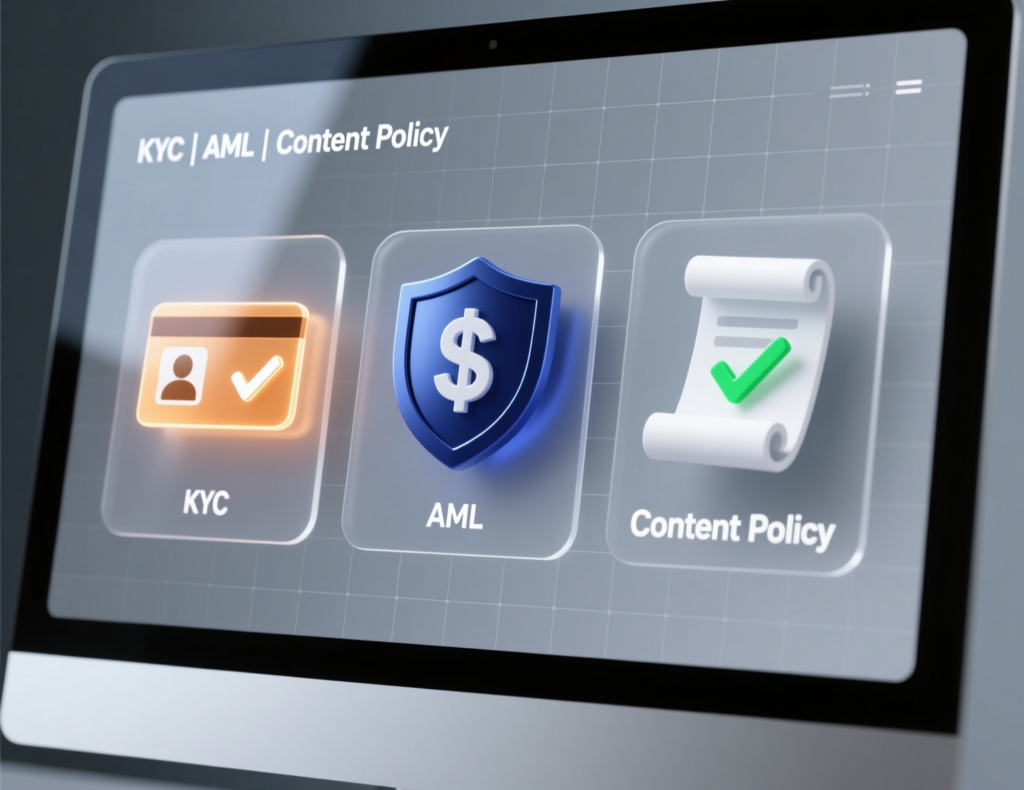
Introduction: The Compliance Tightrope in the Adult Industry
In the fast-growing world of digital adult entertainment, one reality stands firm: compliance is non-negotiable.
While technology has made it easier than ever to launch adult subscription platforms, cam services, or eCommerce stores, it has also made regulatory oversight sharper, more global, and more unforgiving.
Adult businesses face intense scrutiny from payment acquirers, regulators, and financial watchdogs, mainly due to the industry’s association with fraud, money laundering risks, and content-sensitive operations.
As a result, getting approved for — and keeping — a merchant account demands airtight adherence to KYC (Know Your Customer), AML (Anti-Money Laundering), and content moderation policies.
This article unpacks the compliance landscape for adult payment processing, explains the key regulatory frameworks, and offers practical guidance for adult merchants aiming to stay compliant, trusted, and scalable.
1. Why Compliance Defines Survival in Adult Payment Processing
Unlike mainstream industries, adult businesses aren’t just judged by their commercial viability — they are assessed for ethical legitimacy and financial transparency.
a. The Financial Sector’s Risk Lens
Banks and acquirers view adult businesses as compliance-heavy clients because:
- Their transactions often cross borders (multi-currency billing).
- They deal with sensitive, age-restricted content.
- The risk of illegal activity — whether intentional or via third parties — is heightened.
To mitigate exposure, payment acquirers must ensure that every transaction can be traced, verified, and justified — making compliance checks much more stringent than in other industries.
b. From “High-Risk” to “High-Compliance”
In many ways, being “high-risk” isn’t a death sentence — but being non-compliant certainly is.
Even if your chargeback rates are manageable, one compliance lapse — an unverified performer, a missing document, or an outdated content policy — can lead to instant account termination or blacklisting.
Therefore, smart adult merchants now focus on becoming “high-compliance operations” — not just high-performing ones.
2. The Core Pillars: KYC, AML, and Content Policies
Let’s break down the three main compliance foundations that every adult payment processor and merchant must align with.
A. KYC (Know Your Customer): Building Trust Through Transparency
KYC is the cornerstone of any payment relationship. For adult businesses, it’s even more critical because acquirers need absolute certainty about who is behind the business, who is featured in the content, and where the money flows.
Key KYC Elements for Adult Merchants:
- Business Verification:
- Certificate of incorporation
- Business license
- Ownership structure (directors, shareholders)
- Registered address proof
- Ultimate Beneficial Ownership (UBO) Declaration:
Regulators require identification of the individuals who ultimately control or benefit from the company. Hidden ownership or nominee directors are red flags. - Performer and Model Verification:
- Proof of age (must be 18+)
- Consent documentation
- ID verification for all performers or content creators
This is often mandated under U.S. 18 U.S.C. §2257 and equivalent global regulations.
- Website & Domain Ownership:
The merchant must demonstrate clear control over domain registration and website content, proving it’s not a proxy or shell operation.
By meeting KYC standards, adult merchants establish themselves as credible and legally transparent, significantly improving their onboarding success rate.
B. AML (Anti-Money Laundering): Stopping Illicit Fund Flows
AML compliance protects both merchants and acquirers from association with illegal or untraceable financial activities.
Adult businesses are frequently targeted for money laundering, illegal payment rerouting, and tax evasion, often without the merchant’s direct involvement.
Hence, acquirers enforce strict AML frameworks that track every financial movement.
AML Requirements Include:
- Enhanced Due Diligence (EDD):
For cross-border merchants or high-volume accounts, acquirers may request transaction history, source of funds, and banking references. - Transaction Monitoring:
Acquirers monitor for suspicious activity such as sudden volume spikes, high refund ratios, or payments from sanctioned regions. - Record Retention:
Merchants must maintain accurate financial records for at least 5 years in compliance with FATF recommendations. - Suspicious Activity Reporting (SAR):
If any transaction appears fraudulent, acquirers are legally obligated to report it to local authorities or FIUs (Financial Intelligence Units).
What Merchants Can Do:
- Maintain accurate customer data and verify all transactions.
- Use automated monitoring tools to flag unusual patterns.
- Avoid working with unregistered affiliates or third-party payment rerouters.
- Partner only with licensed high-risk acquirers who have AML systems in place.
C. Content Policy Compliance: Protecting Minors and Preventing Exploitation
Even if your business clears all financial checks, non-compliant content can instantly disqualify you from payment acceptance.
Acquirers are mandated to ensure the content sold, streamed, or distributed:
- Is legal in the jurisdictions served,
- Does not feature minors, non-consensual acts, or illegal material, and
- Follows platform-specific moderation rules.
Best Practices for Content Compliance:
- Implement a Transparent Content Moderation Policy:
Define what’s allowed and disallowed. Clearly display it to performers and users. - Age & Consent Verification Systems:
Adopt automated ID verification tools (e.g., Yoti, Veriff, Onfido) to confirm model authenticity. - Watermarking and Metadata Controls:
Protect against unauthorized re-uploads or distribution of illegal content. - Regular Internal Audits:
Review content libraries periodically for compliance with card scheme rules and national laws.
3. The Global Compliance Framework for Adult Payments
Understanding the regulatory backbone that shapes global compliance is essential. Let’s explore the key frameworks that affect adult payment acceptance worldwide.
A. FATF (Financial Action Task Force)
FATF sets international standards for AML/CFT (Countering the Financing of Terrorism).
Adult merchants dealing with cross-border payments must ensure:
- Transparent transaction chains,
- Customer due diligence, and
- No involvement with blacklisted jurisdictions.
Failure to comply can result in frozen settlements and blacklisting by acquirers.
B. PCI DSS (Payment Card Industry Data Security Standard)
All adult websites handling credit or debit card data must comply with PCI DSS standards, which govern:
- Cardholder data encryption,
- Secure storage and transmission, and
- Regular vulnerability scans.
Non-compliance can result in card scheme penalties or data breach liability.
C. EU PSD2 (Revised Payment Services Directive)
For merchants operating within or serving the EU, PSD2 mandates Strong Customer Authentication (SCA) and transparency in payment flows.
Adult businesses must:
- Integrate two-factor authentication (2FA),
- Clearly display subscription terms, and
- Prevent “dark patterns” in payment consent.
D. U.S. FTC and 18 U.S.C. §2257
In the U.S., adult content providers must maintain custodian-of-records documentation proving that every performer was over 18 at the time of production.
The Federal Trade Commission (FTC) also enforces truth-in-advertising laws, ensuring that adult merchants disclose recurring billing, refund terms, and privacy policies transparently.
E. OFAC and Sanctions Compliance
Both U.S. and EU acquirers must ensure that no transactions involve sanctioned countries or individuals.
Adult merchants offering global subscriptions must block payments from high-risk or embargoed territories (e.g., North Korea, Iran, Syria).
4. How Acquirers Conduct Due Diligence and Verification
When an adult merchant applies for a high-risk merchant account, the acquirer’s compliance team performs a multi-layered evaluation:
a. Business Due Diligence (BDD)
- Review of company incorporation, license, and UBO details.
- Assessment of website structure and public content.
- Verification of hosting location and security standards.
b. Technical Due Diligence
- PCI DSS certification review.
- API and payment flow inspection.
- Fraud prevention tool integration (3D Secure, AVS, CVV verification).
c. Content Audit
- Random checks on sample videos, descriptions, and metadata.
- Verification that consent and age documentation exist.
- Screening for prohibited material or regions.
This exhaustive due diligence ensures the acquirer can process payments without violating local or global laws — protecting both the merchant and the payment network.
5. Staying Compliant and Scalable: A Merchant’s Roadmap
Compliance isn’t a one-time checklist — it’s an ongoing operational culture. Here’s how adult merchants can maintain it while scaling globally.
a. Appoint a Compliance Officer
Designate a dedicated compliance manager responsible for overseeing KYC, AML, and content verification.
This person should liaise directly with your acquiring partners.
b. Use Integrated Compliance Platforms
Leverage regtech tools that automate ID verification, transaction screening, and record-keeping.
Examples: SumSub, Trulioo, Veriff, or custom-built KYC APIs.
c. Keep Documentation Updated
Expired licenses or outdated performer consents can lead to account suspension. Maintain digital archives that can be instantly shared with acquirers during reviews.
d. Partner with Reputable High-Risk Acquirers
Work with specialized payment providers experienced in adult compliance — they understand your business model and maintain relationships with compliant banks.
e. Train Your Team
Ensure your customer support, content uploaders, and finance staff understand regulatory red lines.
One uninformed decision can create massive compliance exposure.
6. The Future of Compliance in Adult Payments
The compliance landscape is evolving from manual checks to automated intelligence.
- AI-powered age verification and facial recognition are improving accuracy.
- Blockchain-based identity tokens are being explored for performer verification.
- Dynamic AML monitoring systems allow acquirers to assess risk in real-time instead of static thresholds.
This evolution means future adult merchants can onboard faster, operate safer, and remain globally scalable — provided they embed compliance deeply within their operations.
Conclusion: Compliance Is the New Credibility
In the adult industry, trust is currency.
Every compliant action — from verified performers to traceable payments — strengthens the relationship between merchants, acquirers, and regulators.
Adult merchants who embrace compliance as a business enabler rather than a burden not only secure reliable payment processing but also build a foundation for sustainable, international growth.
Compliance doesn’t slow success — it safeguards it.