


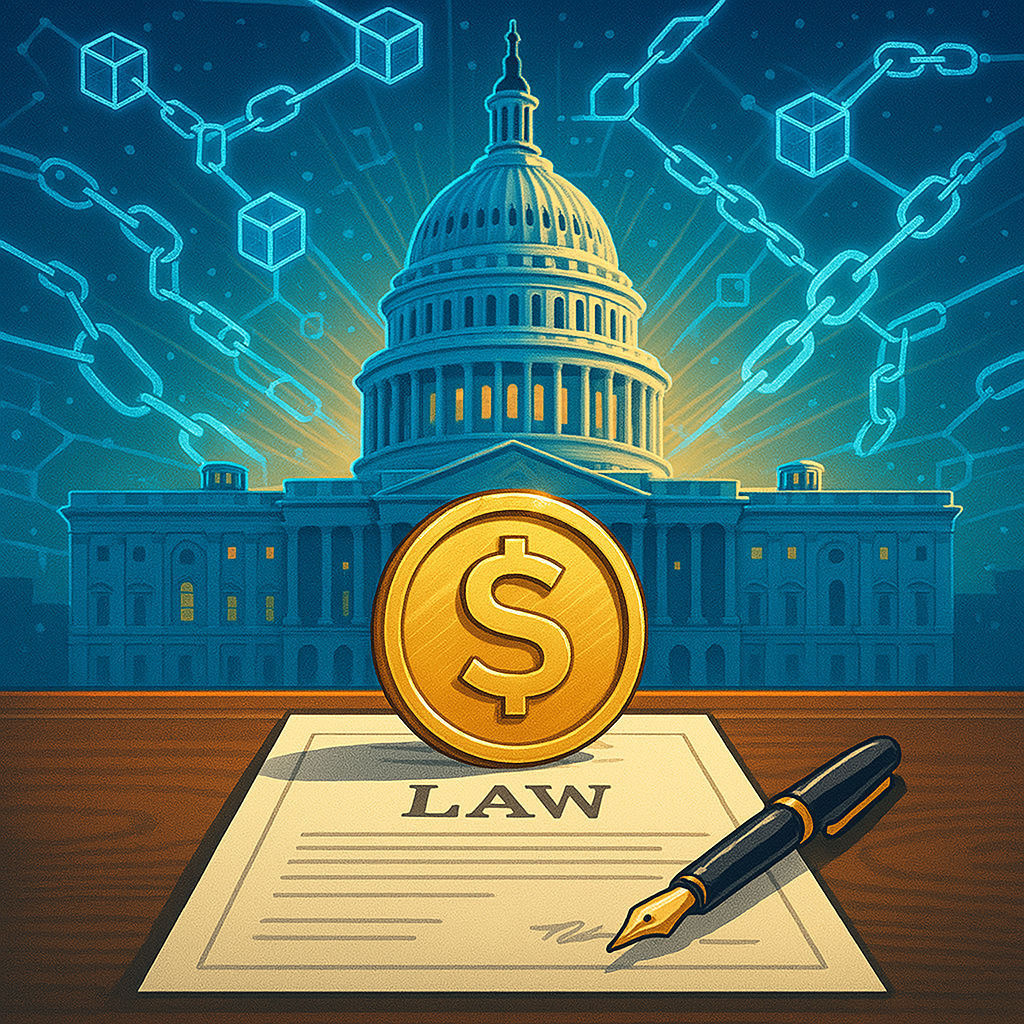
GENIUS Act Signed Into Law: A Defining Moment for Stablecoins and Crypto Regulation
In a pivotal development for the digital asset space, former President Donald Trump signed the GENIUS Act into law this week, cementing a regulatory framework for stablecoins in the United States. The move marks one of the most significant legislative milestones for the crypto industry, as stablecoins inch closer to mainstream financial infrastructure.
What Is the GENIUS Act?
The GENIUS Act—short for Guaranteed Electronic Nationally Issued United States Stablecoins Act—was passed by the House of Representatives with a strong bipartisan vote of 308 to 122. Notably, support came from nearly half of the Democrats and most Republican members, following earlier approval by the Senate.
The bill establishes clear federal guidelines for the issuance and oversight of stablecoins, digital assets pegged to fiat currencies like the U.S. dollar. It sets the groundwork for:
-
Licensing requirements for stablecoin issuers
-
Mandatory reserves backing each issued stablecoin
-
Auditing and transparency obligations
-
Consumer protection standards
Trump’s Endorsement: Political Turning Point
Trump’s formal signing of the bill signals a strategic embrace of crypto innovation, reversing earlier skepticism from several quarters of his administration. Political analysts say this move could position him as a pro-innovation candidate in future elections, especially as digital assets become central to national and global finance.
“Crypto and stablecoins represent American financial ingenuity,” Trump remarked during the signing ceremony. “The GENIUS Act ensures we lead, not follow, in this transformation.”
Industry Reaction: A Welcome Framework
Crypto advocates and fintech companies widely praised the law as a much-needed step toward clarity and legitimacy.
Jeremy Allaire, CEO of Circle (issuer of USDC), called the law “historic,” saying it “opens the door for trusted digital dollars to thrive under responsible regulation.” Meanwhile, Coinbase CEO Brian Armstrong tweeted that it was “a critical foundation for the future of global financial systems.”
Regulated entities like PayPal, Fidelity, and Visa—already exploring stablecoin integrations—are expected to expand their services now that a regulatory structure is in place.
Why This Law Matters
Stablecoins have long existed in a regulatory gray area in the U.S., even as their use surged globally. Their appeal lies in:
-
Borderless transactions
-
Instant settlements
-
Dollar-denominated stability
Yet concerns around money laundering, lack of transparency, and run risks have held back institutional adoption.
The GENIUS Act solves many of those issues by:
-
Requiring stablecoin issuers to hold full 1:1 reserves in cash or short-term Treasuries
-
Mandating independent audits
-
Giving the Federal Reserve and U.S. Treasury joint oversight authority
A Global Ripple Effect?
The U.S. action is likely to trigger similar regulatory efforts in the EU, UK, and Asia, particularly as stablecoin volumes outpace traditional cross-border payment methods. Nations that embrace regulatory clarity may soon become crypto innovation hubs, attracting capital and talent.
Already, Singapore, Japan, and Switzerland have expressed interest in reviewing their stablecoin policies in response to the U.S. breakthrough.
Challenges Ahead
Despite the optimistic outlook, the crypto industry faces lingering challenges:
-
State vs Federal Jurisdiction: Several U.S. states have their own crypto policies. Harmonization remains a challenge.
-
Implementation Timeline: The GENIUS Act’s provisions will roll out in phases, with full compliance expected by mid-2026.
-
Decentralized Alternatives: Algorithmic stablecoins not backed by fiat still remain outside this law’s scope, raising questions about future regulatory actions.
Final Thoughts
The passage and signing of the GENIUS Act mark a defining chapter for the cryptocurrency industry. With stablecoins now under a structured legal framework, the path is clearer for broader adoption, financial inclusion, and integration with traditional banking.
As 2025 progresses, investors, developers, and institutions will watch closely to see how this new law reshapes the crypto-financial ecosystem.