
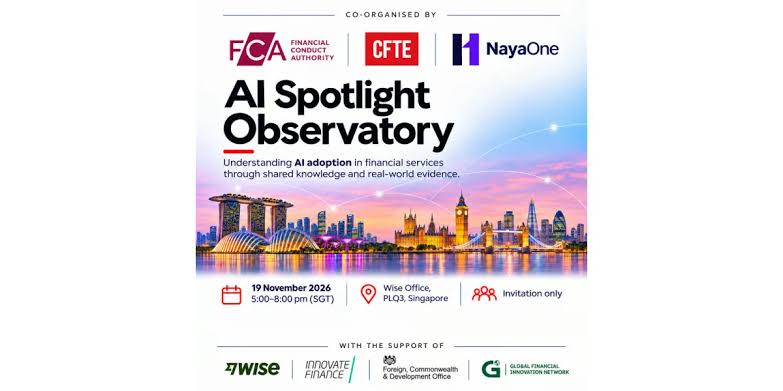
The Observatory highlights a broad range of applications across financial services. These include AI systems designed to combat financial crime, strengthen compliance processes, and support operational efficiency.
It also covers emerging technologies such as agentic payments and neurosymbolic AI.
Agentic payments involve AI agents carrying out parts of a payment journey on behalf of users or businesses. These systems could support activities such as transaction initiation, payment decisions, and interactions between merchants and financial institutions.
Neurosymbolic AI combines neural networks with symbolic reasoning. The approach aims to bring together pattern recognition and structured logic. In financial services, this could support applications where explainability, rules, and complex decision-making matter.
By placing these developments alongside more established applications, the Observatory gives firms a broader view of how AI is entering financial services.
However, the FCA has not described the platform as an approval framework or a certification scheme. Its purpose is to share information and help the market understand innovation. Inclusion in the Observatory does not mean the regulator has endorsed a firm, product, or implementation.
CFTE and NayaOne Support the Platform
The FCA developed the Observatory in partnership with the Centre for Finance, Technology and Entrepreneurship (CFTE) and technology provider NayaOne.
CFTE supported three main areas of development. These included creating the common taxonomy, building the repository, and engaging the market to encourage participation.
NayaOne designed and developed the platform itself. Its work covered the user interface, navigation, search, and filtering capabilities.
The partnership brings together regulatory expertise, financial technology research, and platform development. It also reflects the FCA's intention to make AI market intelligence more accessible beyond large financial institutions.
Smaller firms and fintech startups may benefit from seeing how other organizations approach similar challenges. Researchers and academics can also use the resource to explore adoption patterns and identify areas for further study.
The Observatory will continue to evolve as new examples are added. Firms can apply to have their AI solutions featured on the platform.
Part of the FCA's Wider AI Strategy
The launch builds on the FCA's wider program to understand and support AI adoption in UK financial services.
Its AI Lab provides a route for firms and other stakeholders to engage with the regulator on AI-related innovation. The program includes initiatives such as AI Live Testing and the Supercharged Sandbox.
The Supercharged Sandbox supports firms developing AI solutions that could benefit financial services and markets. It provides a controlled environment for testing and collaboration, with technology support from NVIDIA and other partners.
The FCA has also published examples of good practice and areas for improvement in AI use. This work aims to help firms understand how to adopt the technology safely and responsibly.
Together, these initiatives show that the regulator is approaching AI through several channels. These include market intelligence, practical testing, industry engagement, and guidance on responsible use.
The Observatory adds a market-wide perspective to that work. It gives the FCA and the wider industry a structured way to examine how AI applications are developing across financial services.
Responsible AI Adoption Remains a Central Challenge
Greater visibility of AI adoption does not remove the risks associated with the technology.
Financial institutions must still consider data quality, model governance, cybersecurity, consumer protection, and operational resilience. They also need to understand how AI systems behave when conditions change or unexpected decisions arise.
These concerns become particularly important when AI influences credit decisions, fraud detection, customer interactions, or payment execution.
Agentic systems create additional questions around permissions and accountability. Firms must establish what an AI agent can do, which decisions require human approval and how transactions can be monitored.
A shared repository can help institutions learn from market experience. However, each firm remains responsible for assessing whether a particular solution fits its business, risk appetite, and regulatory obligations.
The FCA's approach is therefore significant because it encourages learning without presenting innovation as a substitute for proper controls.
What the Observatory Could Mean for Fintech Innovation
The AI Spotlight Observatory could become a useful reference point for the financial technology ecosystem.
For banks and insurers, it offers examples that may help inform technology investment and transformation plans. For fintech companies, it creates another channel to demonstrate solutions and reach potential institutional customers.
It could also help investors and researchers identify areas attracting attention across financial services. Over time, a growing repository may reveal which applications are moving from experimentation into wider deployment.
However, the platform's value will depend on the quality and depth of its contributions. The distinction between use cases and implementations will be especially important. Firms need evidence of real-world adoption, not simply descriptions of what AI might achieve.
The FCA has positioned the Observatory as an evolving resource. Its long-term impact will depend on whether organizations contribute meaningful examples and whether users can draw practical lessons from them.
The FinRate Takeaway: The FCA's AI Spotlight Observatory gives financial services a shared way to examine AI adoption across more than 200 organizations and 150 areas of activity. Its biggest contribution may be helping the industry move beyond broad claims about AI towards clearer evidence of how the technology is actually being used.
Comments
No comments yet. Be the first to share your thoughts.
Leave a comment