
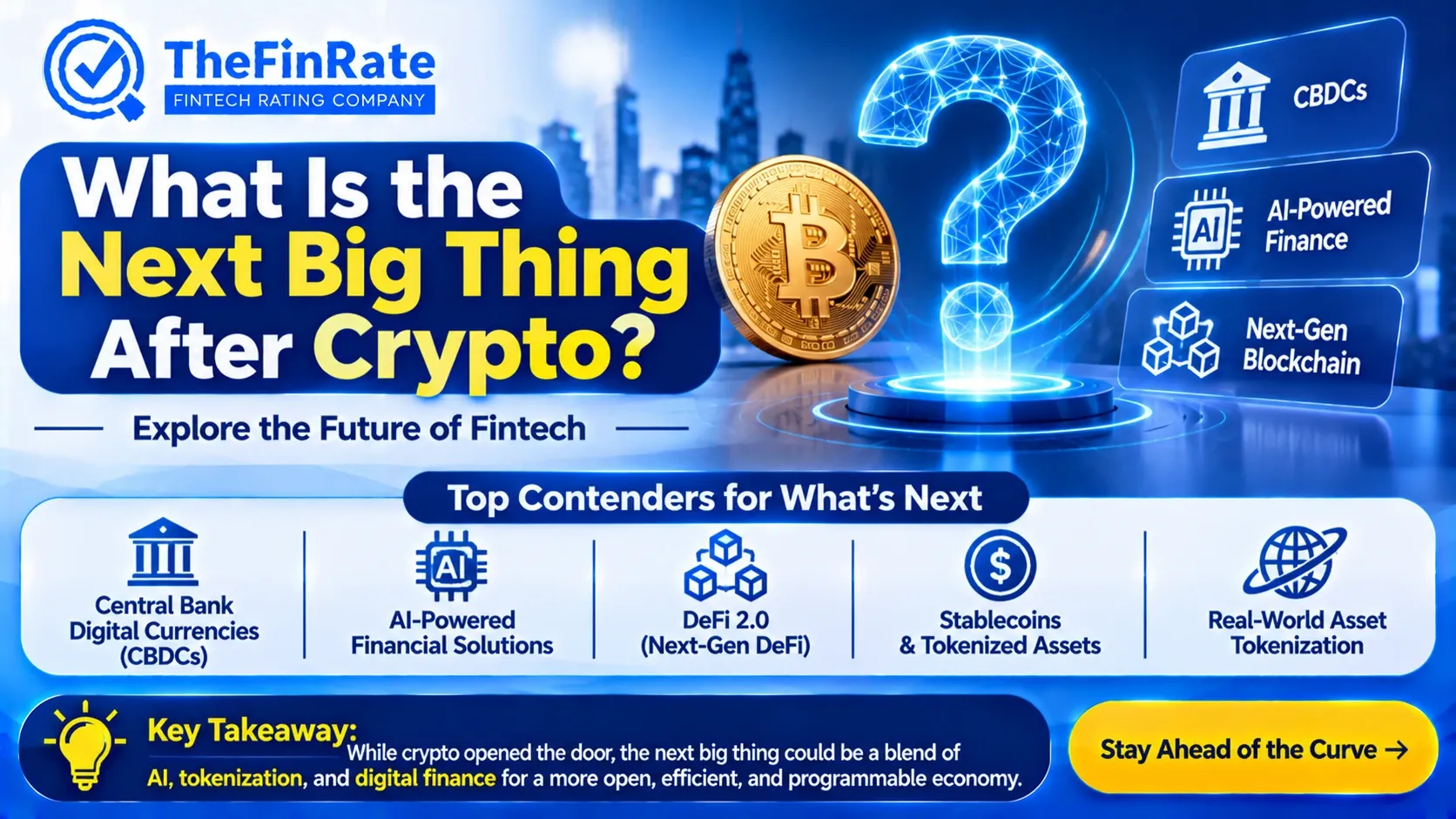
Every few years, a new technology promises to reshape money, and crypto was the loudest of the last decade. Now that bitcoin, stablecoins, and tokenization are part of mainstream finance, businesses and investors are asking what the next big thing after crypto is, and whether it will change how payments work.
The short answer is that no single technology will replace crypto. The most credible candidate is artificial intelligence, especially AI agents that can search, decide, and pay on a user's behalf. Crypto itself is also not disappearing. Parts of it, such as stablecoins and tokenized assets, are being absorbed into the financial system as infrastructure.
In this guide, we explain why crypto is entering a new phase, which technologies are most likely to define what comes next, how they connect to payments, and what merchants and fintech businesses should do to prepare.
Is Crypto Really Over?
Not exactly. The speculative era, defined by price swings and token launches, has given way to a quieter phase focused on utility.
Large payment networks, banks, and fintech companies now treat blockchain technology as a settlement and infrastructure layer. Card networks have expanded stablecoin settlement pilots and stablecoin-linked card programs, and banks are exploring tokenized deposits. Regulation is also catching up, which makes institutions more comfortable building on these rails.
So the question is less "what replaces crypto?" and more "what gets built on top of it, and alongside it?"
The Next Big Thing After Crypto: Top Contenders
1. Artificial Intelligence and Agentic Commerce
AI is the strongest candidate because it already attracts more investment, talent, and everyday usage than any other emerging technology. In payments, the most important development is agentic commerce, where AI agents research products, compare options, and complete purchases for consumers and businesses.
The major card networks are already building for it. Visa has launched Visa Intelligent Commerce and announced a partnership with OpenAI to enable payments initiated by AI agents under user-defined controls such as spending limits, merchant restrictions, and approval requirements. Mastercard has introduced Agent Pay for cardholders. Payment companies are also working on standards for how agents prove their identity and how transactions get authorized.
There are open questions. Traditional commerce assumes a human with judgment is making the purchase and can be held responsible. When an agent buys the wrong item or a payment goes wrong, liability and dispute handling are not yet settled. Some industry observers also consider the current excitement overhyped, and expect established networks to dominate the first phase.
2. Stablecoins and Tokenized Assets
This is the part of crypto most likely to keep growing. Stablecoins are used for cross-border payments, B2B settlement, and payouts, and tokenization turns assets such as funds, bonds, and deposits into digital instruments that can move faster and settle around the clock.
There is also a link to AI. Card rails work well for consumer-sized purchases, but when software agents pay other software for data, compute, or API calls in tiny amounts, card economics can break down. Stablecoins may fill that gap, with cards and stablecoins used at different stages of the same task.
3. Robotics and Physical AI
As AI models improve, the next step is moving them into the physical world through warehouse automation, delivery systems, and humanoid robots. This is a longer-term bet, but it could change logistics, manufacturing, and eventually how machines pay for services such as charging, maintenance, and data.
4. Energy Technology
AI and data centers require large amounts of power, which is driving investment in nuclear energy, grid storage, and new generation technologies. Energy is an enabling layer for almost every other trend on this list.
5. Biotech and Longevity
Advances in GLP-1 drugs, gene editing, and personalized medicine are attracting major capital. The timeline is longer, and the link to payments is indirect, but it is one of the largest long-term opportunities.
6. Quantum Computing
Quantum computing is still early and speculative. It matters to finance for two reasons: it could eventually accelerate complex modeling, and it poses a long-term threat to the cryptography that protects payments and blockchains today. Financial institutions are already studying quantum-resistant security.
Comparison: Where Each Trend Stands
|
Trend |
Maturity |
Link to Payments |
Main Uncertainty |
|---|---|---|---|
|
AI and Agentic Commerce |
Early adoption |
Agents initiating and completing purchases |
Liability, fraud, trust and identity |
|
Stablecoins and Tokenization |
Growing |
Settlement, cross-border, payouts |
Regulation, interoperability |
|
Robotics and Physical AI |
Early |
Machine-to-machine payments |
Cost, safety, timeline |
|
Energy Technology |
Growing |
Indirect |
Capital intensity, policy |
|
Biotech and Longevity |
Established but evolving |
Indirect |
Long development cycles |
|
Quantum Computing |
Experimental |
Security risk and opportunity |
Timeline |
Why the Next Wave Will Not Replace Crypto
Technology waves rarely replace each other cleanly. They overlap and feed one another. AI needs payment rails, and blockchain-based settlement may become the cheapest way for software to pay software. Tokenization needs identity and compliance tooling. Energy tech needs the capital that fintech helps move.
The more useful way to think about it is as a stack. AI is changing how transactions are initiated and trusted, while stablecoins and tokenization are changing how they settle.
What This Means for Merchants and Payment Businesses
Businesses do not need to chase every trend, but a few practical steps make sense.
- Make your checkout readable by machines. If AI agents will shop on behalf of customers, your site should be easy for them to navigate and complete a purchase on. Card networks are already building tools to assess this.
- Strengthen fraud and identity controls. Agent-driven payments and AI-powered scams both raise the bar for authentication.
- Review your dispute process. Rules for agent-initiated transactions are still developing, so clear policies and records matter.
- Stay flexible on payment methods. Cards, bank transfers, and stablecoin options may all coexist. Choose providers that can add new rails without a full rebuild.
- Work with providers that follow compliance rules. Emerging categories often attract higher scrutiny, especially in cross-border and high-risk sectors. If your business is already classified as high risk, see our high-risk merchant account providers guide.
Risks and Limitations to Keep in Mind
- Predictions about technology adoption are often wrong on timing, and many "next big things" arrive slower than expected.
- Early agentic payment volumes are small compared with traditional card volumes.
- Regulation differs across countries and is still evolving for stablecoins, tokenized assets, and AI.
- New technologies create new fraud methods as well as new efficiencies.
Treat every forecast, including this article, as an informed view of direction rather than a guarantee.
Frequently Asked Questions
- What is the next big thing after crypto?
The strongest candidate is artificial intelligence, especially AI agents that can make purchases and payments. Other long-term contenders include robotics, energy technology, biotech, and quantum computing.
- Is crypto dead?
No. The speculative phase has cooled, but stablecoins, tokenized assets, and blockchain-based settlement are being adopted by banks and payment companies as infrastructure.
- What is agentic commerce?
Agentic commerce is a model where AI agents research, choose, and pay for goods and services on behalf of consumers or businesses, usually within limits set by the user.
- Will AI replace credit cards?
Not in the near term. Card networks are building their own agent payment tools, and many experts expect cards and stablecoins to be used together depending on the transaction size and type.
- How are stablecoins connected to AI payments?
Stablecoins can settle very small or very frequent machine-to-machine payments at low cost, which suits software agents paying for data or services. Card rails remain strong for consumer-sized purchases.
- What should merchants do to prepare?
Improve checkout accessibility, strengthen fraud and identity controls, update dispute policies, and choose payment providers that can support new payment methods.
- Is it safe to invest in the next big thing?
Every emerging technology carries risk, including uncertain timelines and changing regulation. Do your own research and consider speaking to a qualified financial adviser before investing.
Conclusion
The next big thing after crypto is unlikely to be a single product. AI is the clearest driver of change, particularly through agent-led commerce, while stablecoins and tokenization continue to mature as the settlement layer underneath. Robotics, energy, biotech, and quantum computing sit on a longer horizon.
For merchants and fintech businesses, the practical takeaway is to stay informed, stay flexible, and work with payment providers that can adapt as these technologies develop.
Explore TheFinRate's Payment Providers Directory to compare payment companies and find solutions that fit your business as payments evolve.
Make informed payment decisions with TheFinRate and find solutions that support your business growth.
About TheFinRate
TheFinRate is a fintech information and provider discovery platform that helps businesses explore, compare, and evaluate payment gateways, merchant account providers, payment processors, acquiring services, and other financial technology solutions.
Through provider listings, industry insights, comparisons, and reviews, TheFinRate helps businesses make more informed decisions about their payment infrastructure.
Comments
No comments yet. Be the first to share your thoughts.
Leave a comment