
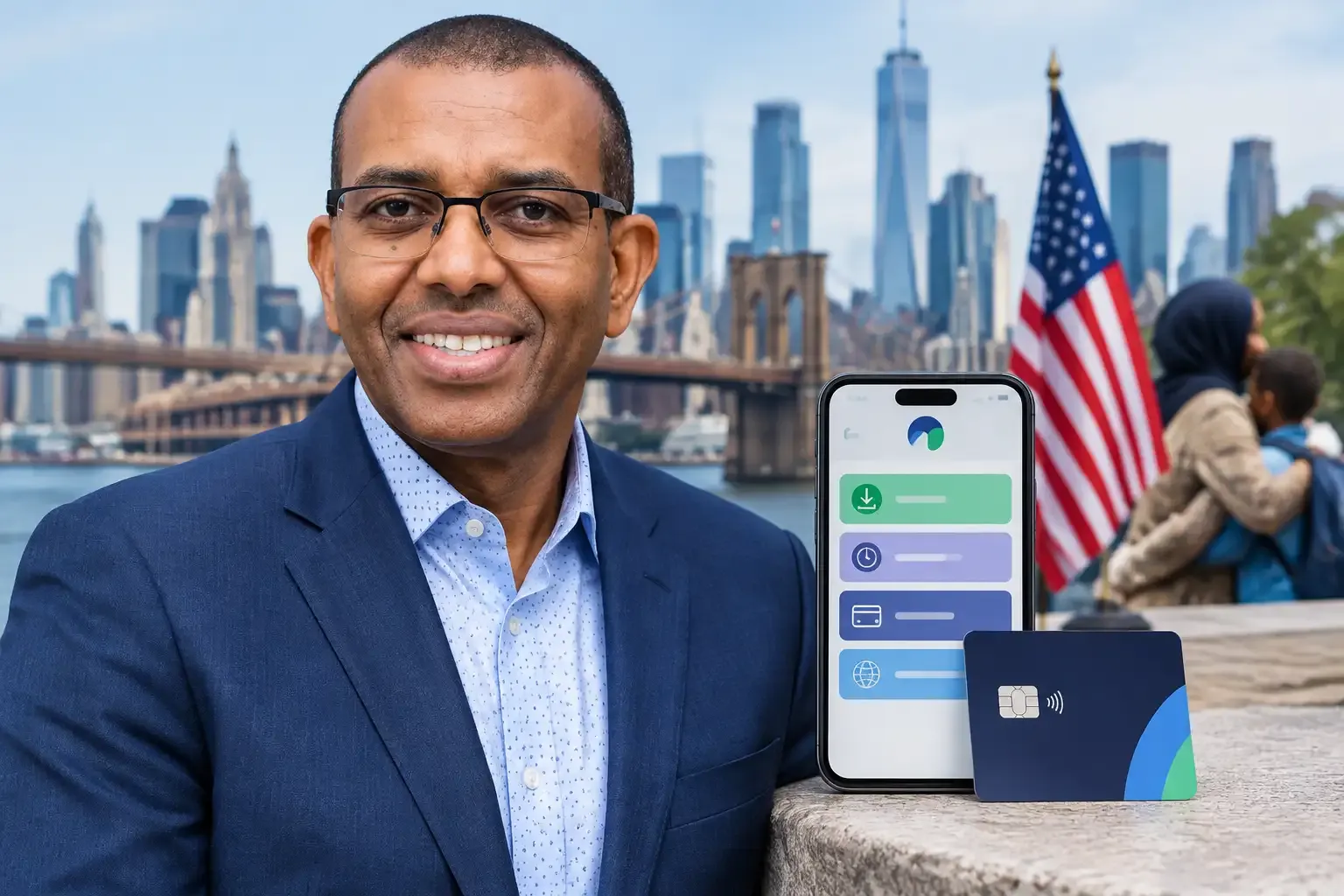
The new US fintech combines salary accounts, early wage access, Visa debit cards, and international transfers in one app for workers supporting families across borders.
WorldRemit founder Ismail Ahmed has launched Odola in the United States, investing an initial $5 million of his personal capital in the new fintech venture. The platform aims to serve immigrants who earn money in the US while supporting families in other countries.
The Odola fintech launch took place on 24 November 2026. The company brings together salary deposits, a Visa debit card, international money transfers, and early access to wages through one financial services app.
Ahmed co-founded Odola with Dr. Abdigani Diriye, who leads product development as Chief Product Officer. The venture aims to address a wider financial need than traditional remittance services.
Instead of focusing only on money sent abroad, Odola also manages the income, spending, and remaining balances of workers in their country of residence.
Ahmed describes the distinction as a shift from managing the money that goes home to managing both the money that goes home and the money that stays.
Odola Combines Salary Accounts and International Transfers
Odola brings several financial services into one application.
Eligible customers can receive their salaries into an account, spend through a Visa debit card, and send money to family overseas. The platform also provides a dashboard showing domestic spending, international transfers, and remaining funds.
This approach targets a common challenge for migrant households. Workers often use separate providers for salary deposits, everyday purchases, and international transfers.
Managing these services across multiple applications can make it harder to understand how much money remains after supporting family abroad.
Odola aims to connect these activities in one place. Customers can see how their income is divided between local expenses and financial commitments in other countries.
The US service is available to eligible customers through iOS and Android, subject to identity verification and approval.
Importantly, Odola is a financial technology company, not a bank. Lead Bank provides the banking services behind the account and issues the Visa debit card.
Early Salary Release Offers Access Up to Two Days Before Payday
One of Odola's key features is early salary release.
The service allows eligible customers to access their wages up to two days before their scheduled payday. This could help workers manage urgent expenses without waiting for their regular salary payment.
The feature is particularly relevant to people supporting family members abroad. An unexpected medical bill or household expense can require money before the next scheduled payday.
Ahmed's broader product vision is built around this financial pressure. Migrant workers must often manage rent, food, and other expenses in their country of residence while sending money to dependants elsewhere.
Odola combines early salary access with its account and remittance services. This gives customers a way to manage these financial commitments within one platform.
However, the announcement does not disclose the detailed eligibility rules, fees, or limits for Early Salary Release. Customers will need to review the applicable product terms before using the service.
Lead Bank Provides US Banking Infrastructure
Odola works with Lead Bank to provide its US banking infrastructure.
Lead Bank provides the Odola account and issues the Visa debit card. The card operates through Visa's payment network, allowing customers to use their funds for eligible purchases.
The arrangement separates the technology platform from the underlying banking services. Odola manages the customer-facing financial experience, while Lead Bank provides the banking infrastructure.
The company states that eligible funds held with Lead Bank may qualify for pass-through FDIC deposit insurance, subject to applicable legal and recordkeeping requirements. Coverage is subject to the standard limits and conditions.
This distinction matters because Odola itself is not an FDIC-insured bank. Customers should also understand that funds may not be covered before they reach Lead Bank or after they leave the bank.
For international transfers, Odola brings remittance services into the same application as salary deposits and domestic spending.
The combined model is designed to reduce the need for customers to maintain separate financial relationships for everyday banking and cross-border payments.
Ismail Ahmed Builds Beyond WorldRemit's Remittance Model
Odola represents Ahmed's next major fintech venture after WorldRemit.
He founded WorldRemit in 2010 and led the company as chief executive for eight years. The digital money-transfer business grew into a major international remittance platform.
WorldRemit focused on making it easier for people to send money across borders. Odola seeks to address the wider financial needs of people who earn in one country and support dependants in another.
Ahmed's personal experience has influenced this approach.
He arrived in the United Kingdom as a refugee from Somalia. While studying and working in England, he picked fruit in Kent and sent part of his earnings to family members in a refugee camp in Ethiopia.
That experience helped shape his understanding of the financial pressures facing migrant workers.
Ahmed believes remittance services address only one part of the problem. Migrants also need ways to manage their income, build financial stability, and plan for their families' futures.
Dr. Abdigani Diriye joins him as co-founder and chief product officer. Diriye previously founded Bloom, a Y Combinator-backed neobank, and worked in artificial intelligence at Amazon and IBM.
Odola's wider team includes professionals with experience at companies such as Western Union, Amazon, Crypto.com, and other financial and technology businesses.
Credit and Investment Products Planned for 2027
Odola has outlined plans to expand beyond its initial account, card, and remittance services.
One planned product is a credit card designed for people without an established US credit history. This addresses a common difficulty for newly arrived immigrants who may have financial experience in another country but limited credit records in the United States.
The company is also planning investment products, including options linked to longer-term savings goals such as education and retirement.
These products are targeted for 2027. They were not part of the initial US launch offering.
The planned expansion could give Odola a broader role in customers' financial lives. It would move the platform further into credit building and savings alongside payments and remittances.
However, the company has not disclosed full product terms, pricing, or launch dates for these planned services.
Odola Targets a Wider Immigrant Financial Services Market
The US launch comes as international remittances remain a major part of the global financial system.
Migrants send money to support households, education, healthcare, and other needs in their countries of origin. Yet the services used to manage their own income and spending often remain separate from remittance platforms.
Odola is targeting this gap by combining salary accounts, early wage access, card payments, and international transfers.
For the fintech sector, the model highlights an opportunity to build financial products around the complete needs of migrant households rather than focusing only on individual transfers.
The challenge will be turning this broader proposition into a trusted and competitive service. Odola will need to demonstrate reliable account operations, transparent transfer pricing, strong customer support, and responsible access to early wages.
Its planned credit and investment products will also require clear terms and suitable safeguards.
For Ahmed, the ambition is to build a financial platform around both sides of an immigrant's financial life. The US launch marks the first major step in bringing that proposition to a wider market.
Comments
No comments yet. Be the first to share your thoughts.
Leave a comment