
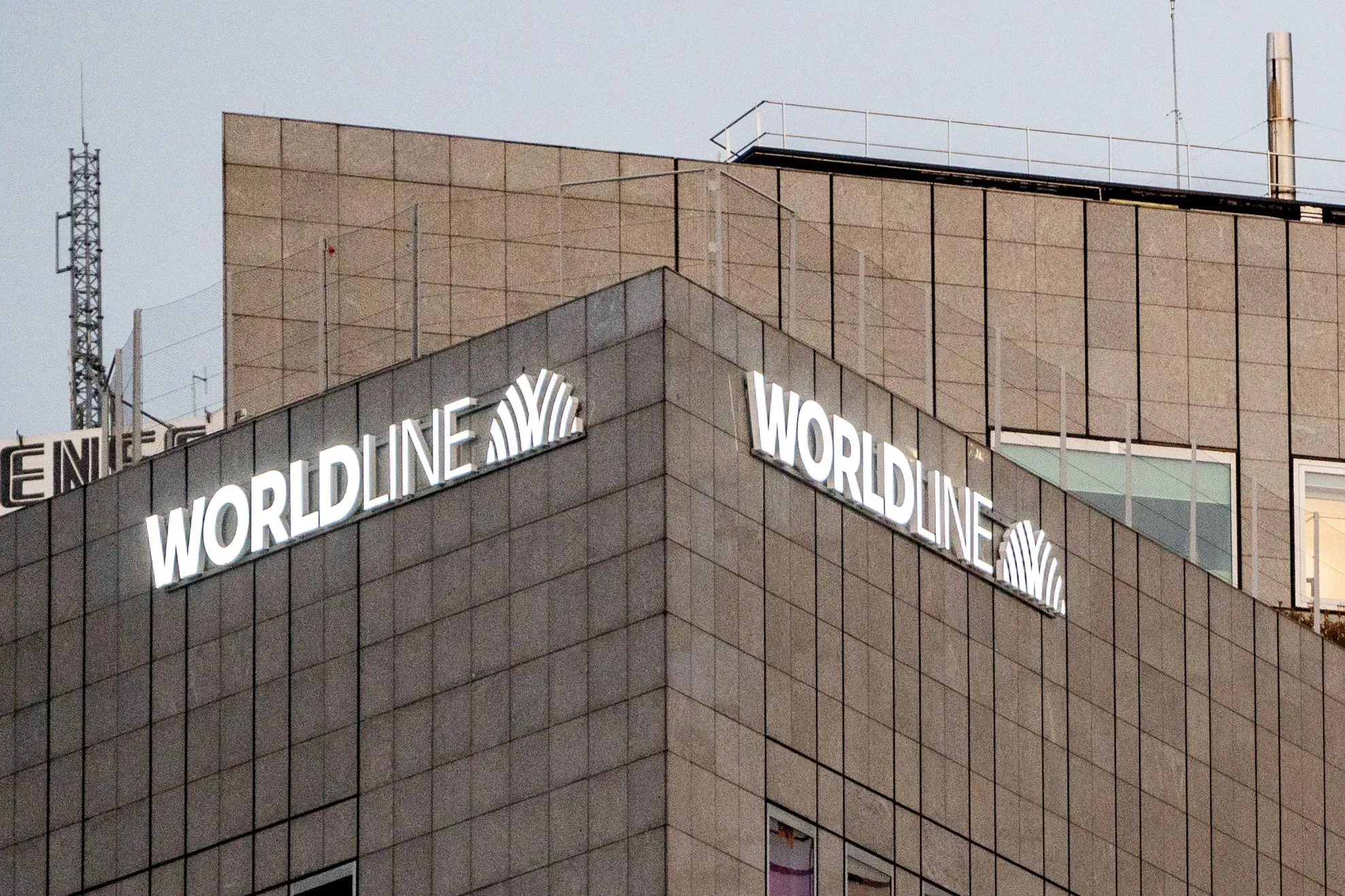
A Financial Times investigation has renewed scrutiny of Worldline’s historical treasury practices. The payments group denies irregularities in its accounts and maintains its 2026 financial outlook.
Worldline shares fell sharply on November 20 after a Financial Times report raised fresh questions about the French payments group's cash flow management before 2023.
The stock dropped as much as 20% during trading before recovering part of its losses. It was still down around 15% at the time of the Bloomberg report.
The Financial Times, citing internal documents, messages, and people familiar with the company, reported that Worldline repeatedly delayed supplier payments and sought cash advances from customers ahead of financial reporting dates.
The reported practices took place from at least 2021 to 2023. They allegedly helped the company restrict cash outflows and increase incoming funds around half-yearly reporting periods.
The report has renewed concerns about the quality of Worldline's historical cash flow figures. However, the allegations do not establish that the company breached accounting rules or misrepresented its financial statements.
Worldline rejected suggestions of irregularities. It said its accounts comply with applicable regulations and undergo several levels of review and approval.
PwC Report Raises Questions About Worldline's 2022 Cash Flow
One of the most significant details in the Financial Times report concerns a PwC analysis prepared for Worldline in late 2023.
According to the newspaper, the report estimated that Worldline's reported free cash flow of €520 million in 2022 would have been approximately €200 million lower without what it called "optimization" effects.
That would imply an adjusted figure of roughly €320 million under the analysis described by the FT.
The report also reportedly found that profit-to-cash conversion would have been lower in 2021, 2022, and early 2023 on a fully normalized basis.
Profit-to-cash conversion measures how effectively a company turns accounting earnings into cash. Investors monitor this measure because reported profits do not always translate into available cash.
For payment companies, cash flow is particularly important. Their business models involve processing large transaction volumes and managing funds across merchants, financial institutions, and other partners.
However, the distinction between reported and normalized cash flow matters. Timing differences can affect cash balances around reporting dates without necessarily changing the underlying profitability of a business.
The central question is whether the practices reflected ordinary treasury management or created a misleading picture of Worldline's financial performance.
The available report does not establish a regulatory finding of misconduct.
Worldline Rejects Allegations and Defends Financial Reporting
Worldline responded to the report with a statement on November 20.
The company said its accounts are systematically reviewed by its audit committee, approved by its board of directors, certified by statutory auditors, and approved by shareholders.
It added that its financial statements are prepared in accordance with applicable regulations and are "free from any irregularities."
Worldline also said its board examines serious concerns thoroughly, particularly through whistleblowing procedures.
The company expressed regret over what it described as the repetition of past allegations. It said management remains focused on its North Star 2030 strategic plan.
Importantly, Worldline did not withdraw its financial guidance for 2026.
The company confirmed its outlook on a fully pruned basis:
- Revenue: Flat to marginally positive growth.
- Adjusted EBITDA: €630 million to €650 million.
- Free cash flow: Between negative €60 million and negative €40 million.
These targets remain important for investors assessing whether Worldline can stabilize its operations and rebuild confidence.
Renewed Scrutiny Adds to Worldline's Investor Confidence Problems
The latest report arrives during a difficult period for Worldline.
The company has faced repeated questions about its financial performance, merchant risk controls, and ability to restore investor confidence.
In October 2023, Worldline issued a profit warning amid weaker sales expectations and the termination of certain merchant relationships. Its shares suffered a major decline following the announcement.
Later media reports also raised allegations about the company's handling of merchant fraud risks. Worldline said it had strengthened its merchant risk controls and terminated relationships that did not meet its requirements.
These episodes have made transparency and governance central to the company's recovery efforts.
Worldline also completed a major capital-raising programme in March 2026. The transaction included approximately €108 million from strategic investors and a rights issue of around €392 million.
Bpifrance, Crédit Agricole, and BNP Paribas participated as strategic investors. The capital increase was intended to strengthen the company's financial position and support its transformation plan.
The new questions over historical cash flow practices therefore arrive at a sensitive moment. Worldline needs to demonstrate that its operational recovery is supported by sustainable cash generation.
Why Cash Flow Timing Matters for Payment Companies
The allegations highlight a broader issue for investors in payment infrastructure businesses: the difference between cash flow reported at a particular date and cash generated through normal operations.
Delaying supplier payments can preserve cash temporarily. Similarly, receiving customer payments earlier can increase cash inflows before a reporting deadline.
These practices are not automatically unlawful. Their treatment depends on contractual terms, accounting rules, and the circumstances in which they occur.
Nevertheless, investors need to understand whether reported cash generation reflects sustainable business performance.
This distinction matters because payment companies often handle substantial transaction volumes. Their financial statements can include complex working-capital movements and settlement-related balances.
A company may report strong free cash flow in one period while relying on timing effects that do not repeat in later periods.
For Worldline, the reported PwC analysis makes this issue especially relevant. Investors will want clearer information about the adjustments, their accounting treatment, and their impact on historical performance.
What Investors Will Watch Next
Worldline now faces a credibility test alongside its operational recovery.
Investors are likely to focus on the company's future cash flow performance, the assumptions behind its 2026 guidance, and any further information about the historical treasury practices.
The board's response will also matter. Worldline has said that serious concerns are examined through its governance and whistleblowing procedures.
However, the company may need to provide greater clarity if questions about historical cash generation continue to affect market confidence.
The latest share-price decline shows how sensitive investors remain to governance and financial reporting concerns.
For a major European payments provider, restoring trust requires more than confirming financial targets. It requires consistent cash generation, transparent reporting, and confidence in internal controls.
The key question is whether Worldline can demonstrate that its recovery is built on sustainable operating performance rather than temporary cash flow improvements.
Comments
No comments yet. Be the first to share your thoughts.
Leave a comment