
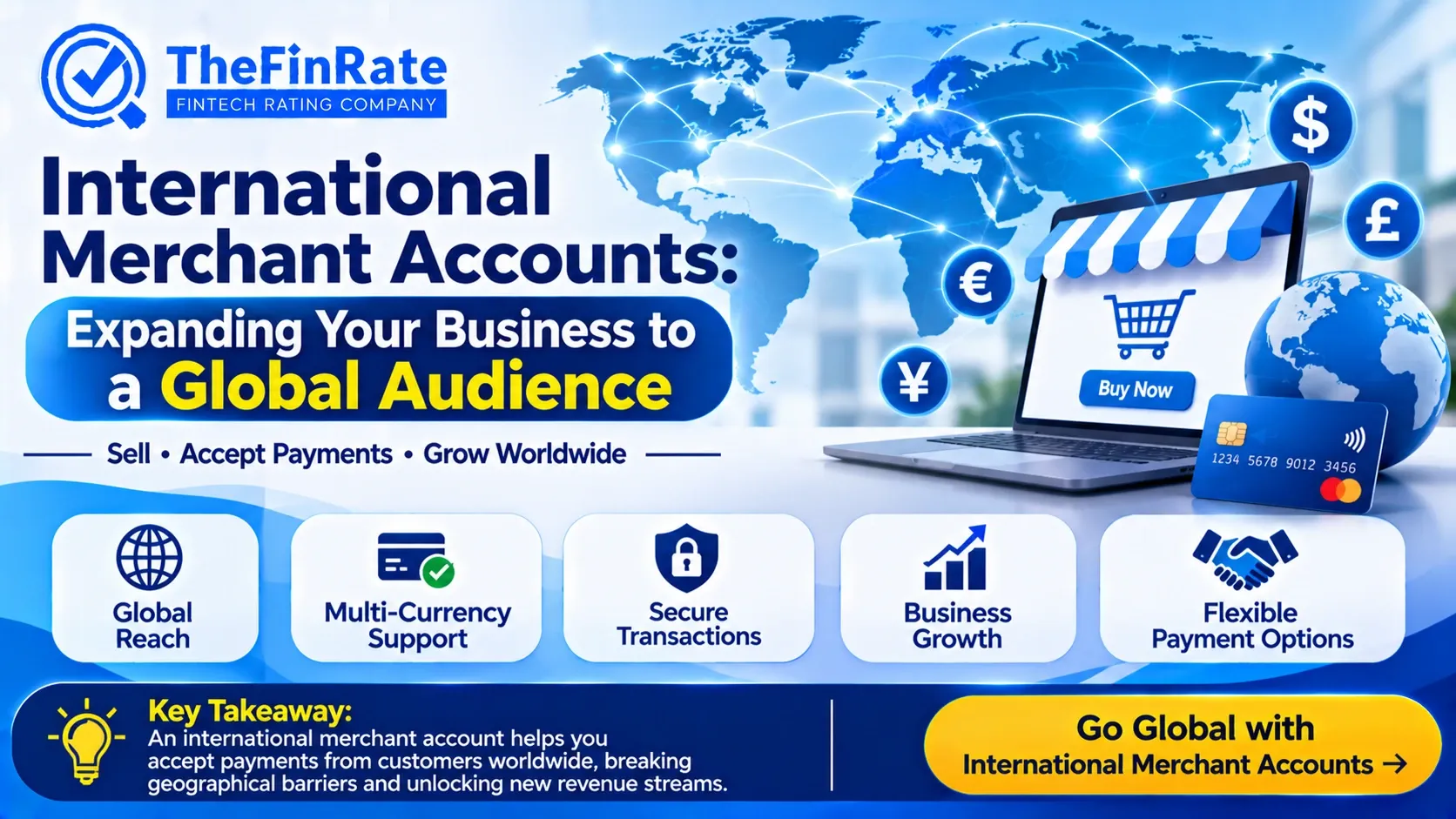
Expanding into international markets offers businesses an opportunity to reach new customers, increase sales, and build a stronger global presence. However, accepting payments across different countries involves more than simply offering products or services to international buyers. Businesses must also manage multiple currencies, regional payment preferences, transaction fees, and financial regulations.
This is where international merchant accounts become important. They help businesses accept payments from customers worldwide while supporting cross-border transactions and different payment methods.
Whether you operate an eCommerce store, SaaS platform, or international service business, choosing the right merchant account can simplify global payment processing.
In this guide, we'll explore how international merchant accounts work, their major benefits, what to consider when selecting a provider, and the best practices for managing international payments.
What Are International Merchant Accounts and How Do They Work?
An international merchant account is a payment processing arrangement that enables businesses to accept card payments and other electronic transactions from customers in different countries.
Unlike traditional domestic merchant accounts, international payment solutions are designed to support cross-border transactions, multiple currencies, and international payment networks.
Depending on the provider and account structure, businesses may also receive access to features such as:
- Multi-currency payment acceptance.
- International credit and debit card processing.
- Cross-border transaction management.
- Foreign currency settlement options.
- Fraud monitoring and chargeback management.
- Integration with global payment gateways.
For example, an online retailer based in the United States can use an international merchant account to accept payments from customers in Europe or Asia.
Businesses looking for suitable payment solutions can also explore TheFinRate's secure merchant account providers to understand the available options.
Why Businesses Need International Merchant Accounts
Entering international markets creates new revenue opportunities, but payment limitations can affect customer experience and sales performance. International merchant accounts help businesses overcome several of these challenges.
1. Expand Into International Markets
Businesses can reach customers beyond their domestic markets without relying entirely on local payment infrastructure.
An international merchant account makes it easier to accept payments from customers in different geographical regions. This is particularly useful for online retailers, subscription platforms, SaaS companies, and businesses offering international services.
2. Accept Payments in Multiple Currencies
Customers generally prefer paying in their local currency rather than calculating exchange rates themselves.
Multi-currency processing allows businesses to display prices and accept payments in supported currencies. This can reduce checkout confusion and improve the overall purchasing experience.
However, businesses should check whether their provider supports local currency settlement or only currency conversion at checkout.
3. Manage Currency Conversion Costs
International payments can involve foreign exchange charges and additional processing costs.
Some merchant account providers offer competitive currency conversion rates or multi-currency settlement options. Comparing these features can help businesses control payment expenses and protect their profit margins.
4. Improve Payment Collection and Cash Flow
Managing payments from several countries can create complications involving settlement schedules, transaction currencies, and banking arrangements.
A suitable international merchant account can centralize payment collection and provide reporting tools that help businesses monitor incoming transactions.
Settlement speed depends on the provider, currency, country, and risk assessment requirements.
5. Strengthen Transaction Security
International payment processing requires effective fraud prevention because businesses may encounter unfamiliar transaction patterns and cross-border fraud risks.
Many providers offer security features such as encryption, tokenization, transaction monitoring, and authentication tools.
These features help businesses identify suspicious transactions and protect sensitive customer payment information.
How to Choose the Right International Merchant Account Provider
Selecting a merchant account provider requires more than comparing transaction fees. Businesses should evaluate the provider's international coverage, supported currencies, payment infrastructure, and compliance capabilities.
1. Compare International Processing Fees
International transactions may involve additional costs beyond standard domestic processing fees.
Before selecting a provider, review:
- International card processing fees.
- Currency conversion charges.
- Monthly account maintenance fees.
- Chargeback and refund fees.
- Cross-border settlement costs.
A transparent pricing structure makes it easier to calculate the actual cost of accepting international payments.
You can also explore low-cost merchant accounts to compare payment processing options and understand potential cost-saving opportunities.
2. Check Multi-Currency and Settlement Support
Not every provider supports the same currencies or settlement arrangements.
Businesses should identify the currencies they expect to accept and confirm whether the provider supports settlement in those currencies.
This is particularly important for companies operating across Europe, North America, Asia-Pacific, and other international markets.
3. Evaluate Available Payment Methods
Payment preferences differ significantly between countries.
For example, customers in some markets primarily use credit cards, while others prefer digital wallets, bank transfers, or local payment methods.
Look for providers that support relevant regional payment options, including:
- Visa and Mastercard.
- Digital wallets.
- Local bank transfers.
- Alternative payment methods.
- Regional payment networks.
Offering familiar payment methods can reduce checkout friction and help improve payment acceptance.
4. Look for Reliable Payment Gateway Integration
A merchant account should work smoothly with your payment gateway and existing business infrastructure.
Check whether the provider offers API integration, eCommerce platform compatibility, recurring billing support, and transaction reporting.
For businesses comparing different payment technologies, TheFinRate's payment gateway directory can help identify potential solutions.
5. Understand International Compliance Requirements
Cross-border payment processing involves different regulatory and compliance requirements.
Depending on the countries involved, businesses may need to consider:
- Payment Card Industry Data Security Standard (PCI DSS).
- Anti-Money Laundering (AML) requirements.
- Know Your Customer (KYC) procedures.
- Data protection regulations.
- Local financial licensing requirements.
Businesses should confirm which compliance responsibilities are handled by the provider and which remain their own responsibility.
Best Practices for Managing International Merchant Accounts
Opening an international merchant account is only the first step. Businesses must also establish effective payment management practices to maintain operational efficiency and reduce financial risks.
1. Track Foreign Exchange Movements
Exchange rates fluctuate regularly and can affect the value of international transactions.
Monitor currency movements and review your pricing strategy periodically. Where appropriate, consider multi-currency settlement arrangements to reduce unnecessary conversion costs.
2. Create a Localized Checkout Experience
A checkout experience designed for international customers should consider local currencies, languages, and preferred payment methods.
Display prices clearly, provide familiar payment options, and avoid unnecessary steps during checkout.
A localized payment experience can make international purchases easier and more convenient.
3. Automate Payment Reconciliation
Processing payments from multiple countries can make financial reporting complicated.
Use automated reporting and reconciliation tools to track:
- Transaction amounts.
- Processing fees.
- Currency conversions.
- Refunds and chargebacks.
- Settlement schedules.
Regular reconciliation helps businesses identify discrepancies and maintain accurate financial records.
4. Strengthen Fraud Detection and Prevention
International merchants should establish appropriate fraud prevention measures.
Consider implementing transaction monitoring, 3D Secure authentication, address verification where supported, and risk-based transaction screening.
Businesses should also regularly review chargeback trends and suspicious payment activity.
5. Stay Updated on Regional Payment Regulations
Payment regulations and compliance requirements can change across different markets.
Businesses should regularly review applicable financial regulations, tax obligations, and data protection requirements.
Working with an experienced payment provider and qualified compliance professionals can help reduce regulatory risks.
Top International Merchant Account Providers to Consider
Choosing a provider depends on your business model, operating countries, transaction volume, and payment requirements. The following companies offer international payment processing services worth evaluating.
1. PayPal
PayPal is a widely recognized digital payment platform that enables businesses to accept payments from customers in supported international markets.
Its services include online card processing, digital wallet payments, and multi-currency capabilities. It can be suitable for smaller businesses and online retailers seeking a recognizable payment option.
2. Stripe
Stripe provides payment processing infrastructure for online businesses, marketplaces, and subscription-based companies.
Its platform offers APIs, international payment acceptance, recurring billing, and support for various payment methods. It is particularly useful for businesses that need customizable payment integrations.
3. Worldpay
Worldpay provides payment processing services for businesses operating across different markets.
Its offerings include card acceptance, payment gateway services, fraud management, and international payment capabilities. Businesses should confirm the currencies, countries, and settlement options available under their proposed agreement.
4. Adyen
Adyen offers a unified payment platform designed for businesses with international payment requirements.
Its services include online and in-person payment processing, local payment methods, risk management, and payment data analytics.
It may be suitable for established businesses looking to manage payments across multiple markets through a single platform.
Note: Provider availability, fees, supported currencies, and account eligibility vary by country and business type. Always verify current terms directly with the provider.
Final Thoughts: Choosing an International Merchant Account for Global Growth
International merchant accounts play an important role in helping businesses accept payments across borders and reach customers in new markets.
From multi-currency processing and localized checkout experiences to fraud prevention and payment reconciliation, the right solution can simplify international payment operations.
Before choosing a provider, compare transaction costs, currency support, settlement arrangements, payment methods, integration capabilities, and compliance requirements.
Businesses should also consider their long-term expansion plans rather than selecting a provider based only on its initial processing fees.
Explore TheFinRate to compare merchant account providers and discover payment solutions that support your business's international growth.
Comments
No comments yet. Be the first to share your thoughts.
Leave a comment