
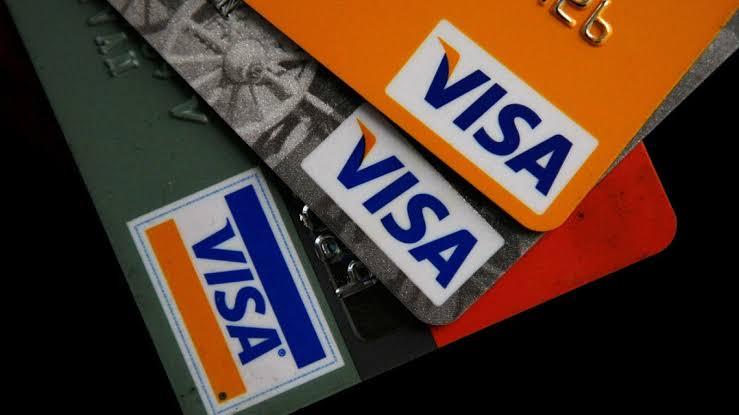
The planned 2027 debit card will let eligible NBX customers access traditional currency and supported stablecoin balances through one Visa credential, with five European markets targeted for its initial rollout.
Visa and Norwegian digital asset platform NBX are developing a stablecoin-linked payment card that will allow customers to spend from traditional currency and supported stablecoin balances through a single card.
The planned Visa NBX Flex Card will use Visa Flexible Credential technology. It will let eligible customers set payment preferences and choose which available balance funds a purchase.
Announced on 26 November 2026, the initiative also involves Tieto Banktech and IDT Finance. The partners expect the card to launch in 2027, initially offering debit functionality in Norway, Sweden, Denmark, Finland, and Germany.
The development reflects a growing effort to connect digital asset platforms with established payment infrastructure. Instead of moving funds between wallets and bank accounts before spending, customers could access different eligible balances through one payment credential.
One card connects traditional currency and stablecoins.
Traditional currencies and stablecoins often sit in separate accounts or digital wallets. Spending from them can require customers to move funds, convert currencies, or use different payment cards.
The new Visa Flex Card aims to simplify that experience.
Using Visa Flexible Credential, customers will be able to configure payment preferences across eligible funding sources. For example, a customer could select a local currency balance for everyday purchases and use an eligible US dollar balance for transactions priced in dollars.
This approach could also reduce unnecessary currency conversions when a suitable balance is available.
The card is designed to support several capabilities:
- Access supported traditional currency and stablecoin balances through one Visa card.
- Set preferences for which eligible balance should fund payments.
- Select a balance that matches the purchase currency where available.
- Add further funding sources over time, including traditional credit.
Customers will be able to use one credential rather than managing separate cards for different funding sources.
However, the announcement does not disclose the full list of stablecoins that the card will support. NBX issues USDM, a US dollar-backed stablecoin on the Cardano blockchain in the European Economic Area. Whether USDM will be the only supported stablecoin or one of several eligible assets will become clearer closer to launch.
Visa Flexible Credential provides the payment technology.
The program is built around Visa Flexible Credential, which allows a single Visa payment credential to connect with multiple funding accounts.
The technology gives issuers flexibility to offer different payment options through one card. Depending on the program, these can include debit, credit, installments, and multiple currencies.
For the NBX program, the initial focus is on connecting traditional currency and supported stablecoin balances.
This model could make digital assets more practical for everyday purchases. Customers would not need to manage a separate payment experience for each eligible funding source.
Visa's Mathieu Altwegg, Head of Product and Solutions for Europe, said the technology gives consumers more choice through a familiar payment credential. He added that the partnership aims to bring stablecoins into everyday spending.
The initiative also builds on Visa's broader work to support flexible payment experiences. Its technology allows participating issuers to connect multiple accounts to one credential while maintaining transaction-level payment information.
Importantly, Visa Flexible Credential does not itself issue stablecoins or provide the underlying customer accounts. Those responsibilities sit with the relevant program partners and financial institutions.
Four partners divide the program responsibilities.
The initiative brings together four companies with different roles across payments, digital assets, card processing, and issuing.
Visa provides the global payment network and Flexible Credential technology. Its infrastructure enables the card to operate through an established payment acceptance network.
NBX brings the digital asset platform and customer relationship. The Norwegian company issues USDM, a US dollar-backed stablecoin on Cardano in the EEA. It will also determine how supported balances are made available to eligible customers.
Tieto Banktech supplies card and payment processing technology. The company previously announced a contract with NBX to support digital and physical payment cards, including card administration, authorizations, PIN services, and fraud monitoring.
IDT Finance, operating through Justcards (Europe) Limited, provides regulated card issuing and BIN sponsorship capabilities. The company is authorized by Malta's Financial Services Authority.
This structure allows NBX to develop a card program using established issuing and processing infrastructure. It also separates the digital asset platform's role from the regulated card issuance function.
The arrangement builds on a September 2026 agreement under which NBX selected Tieto Banktech for its card program. The new announcement adds the planned Visa Flexible Credential functionality to that relationship.
Five European markets targeted for the initial launch
The partners expect the Visa Flex Card to launch with debit functionality in five markets:
- Norway
- Sweden
- Denmark
- Finland
- Germany
NBX also plans to expand the program to Poland at a later date.
The initial rollout is therefore focused on Northern Europe and Germany. The partners have not announced a specific launch date, card fees, customer eligibility rules, or detailed funding limits.
They also have not disclosed expected card issuance volumes or transaction targets.
Over time, NBX intends to add more funding sources to the same credential. Traditional credit is one of the planned additions.
This could allow the card to evolve from a debit product into a more flexible payment tool. However, credit functionality is a future development, not part of the initial launch announcement.
Stablecoin spending comes with different risks from bank deposits.
The partnership aims to make stablecoins easier to spend, but customers should understand how these assets differ from conventional bank balances.
NBX describes USDM as a US dollar-backed stablecoin issued on Cardano in the European Economic Area. The company says holders can redeem its USDM at par value, subject to the applicable terms and white paper.
However, an e-money token is not a bank deposit. It is not covered by a deposit guarantee scheme.
The value and usability of a stablecoin can also depend on its issuer, redemption arrangements, operational infrastructure, and blockchain network. Customers should review the relevant terms, fees, and risks before using supported tokens.
The card's eventual availability will also depend on the program's launch conditions, customer eligibility, and the markets where the issuing arrangements permit access.
What the Visa and NBX partnership means for payments
The planned card illustrates how payment networks and digital asset platforms are working to connect stablecoins with familiar consumer payment experiences.
For NBX, the program offers a route beyond digital asset trading and holding. It could help the company build a closer relationship with customers through everyday spending.
For Visa, the partnership demonstrates another use case for Flexible Credential technology. A single card can connect multiple funding sources without requiring merchants to adopt a separate payment method.
The commercial test will be whether customers use the flexibility regularly. Adoption will depend on supported assets, fees, exchange rates, card availability, and the ease of managing funding preferences.
The 2027 launch will provide the first indication of how effectively the partners can bring stablecoin balances into routine payments.
The wider opportunity is clear: stablecoins may become more useful when customers can spend them through existing payment infrastructure. But adoption will depend on transparent redemption terms, reliable issuing arrangements, and genuine everyday utility.
Comments
No comments yet. Be the first to share your thoughts.
Leave a comment