
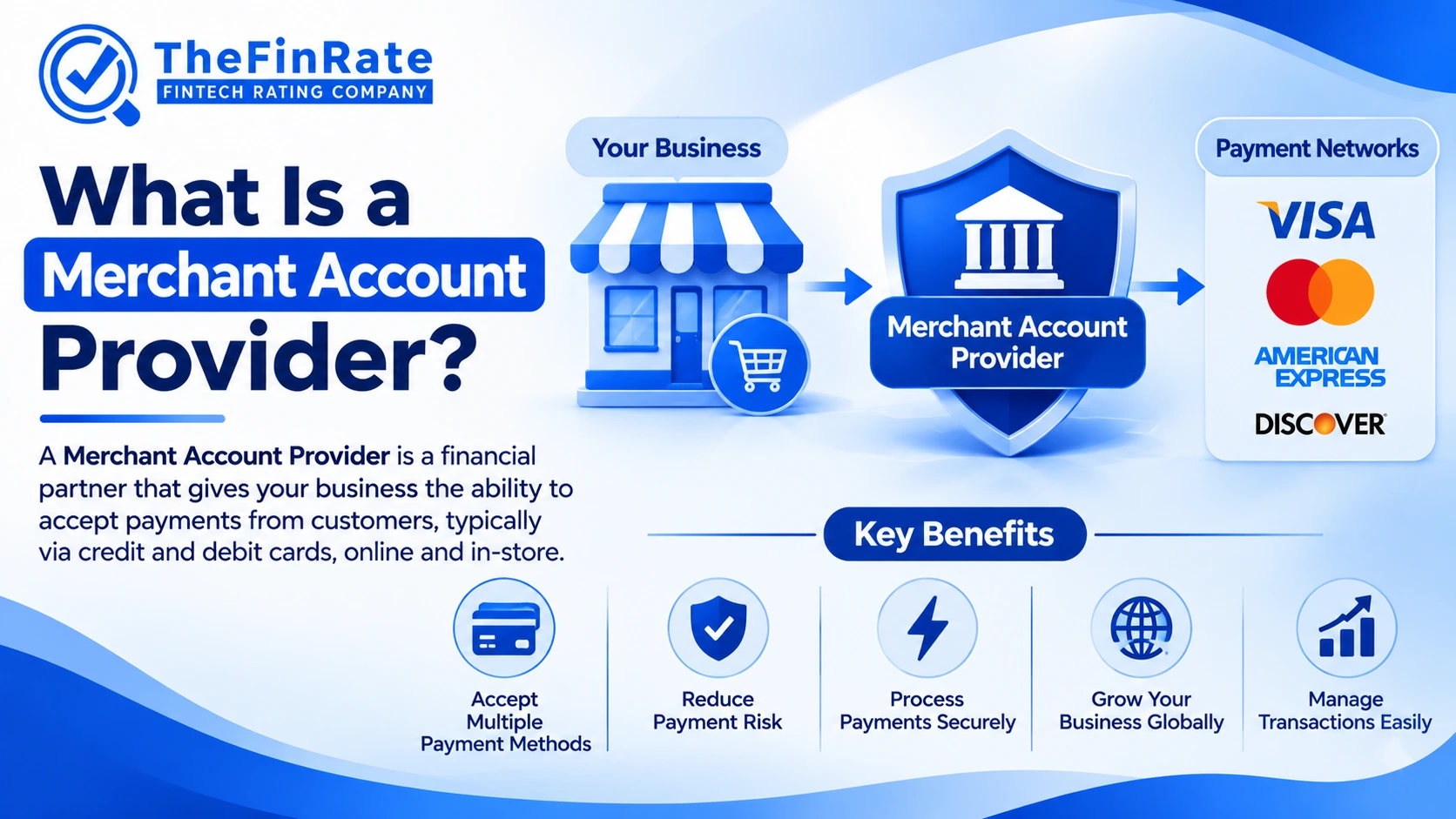
In today's digital economy, businesses need reliable ways to accept payments from customers. Whether a company operates an online store, a physical retail outlet, or a subscription-based platform, accepting electronic payments is essential for growth. This is where a merchant account provider plays an important role.
A merchant account provider helps businesses accept credit card and debit card payments by offering merchant account services and payment processing solutions. These services allow businesses to collect customer payments, process transactions, and receive funds into their business bank accounts.
In this guide, we will explain what a merchant account provider is, how it works, the services it offers, and how businesses can choose the right provider.
What Is a Merchant Account Provider?
A merchant account provider is a financial services company that helps businesses accept and process electronic payments, including credit cards and debit cards.
It provides or facilitates access to a merchant account, which is a specialized account used to handle card payment transactions before funds are transferred to a business's regular bank account.
Merchant account providers may also offer payment processing, fraud prevention, chargeback management, payment gateway integration, and transaction reporting.
Businesses of different sizes use these services to accept payments securely and manage their payment operations.
How Does a Merchant Account Provider Work?
A merchant account provider works with payment processors, acquiring banks, card networks, and issuing banks to complete payment transactions.
Here is how the process generally works:
- Merchant Account Setup: A business applies for a merchant account and submits the required business and financial information.
- Customer Makes a Payment: A customer purchases a product or service using a credit card or debit card.
- Payment Authorization: The payment information is securely transmitted through the payment gateway and processor to the relevant card network and issuing bank.
- Transaction Approval: The issuing bank checks the transaction and approves or declines the payment.
- Fund Settlement: Approved transactions are processed for settlement, and funds are transferred to the merchant's designated bank account after applicable fees and settlement timelines.
This process allows businesses to accept card payments without managing the complex banking infrastructure themselves.
What Services Does a Merchant Account Provider Offer?
Merchant account providers offer different services depending on the provider and the business's requirements.
1. Merchant Account Setup
Providers help businesses establish merchant accounts so they can accept electronic payments. The application process may include business verification, underwriting, and risk assessment.
2. Credit and Debit Card Processing
Businesses can accept payments through major card networks, including Visa, Mastercard, and other supported payment methods.
3. Payment Gateway Integration
Many providers offer payment gateway integrations that allow online businesses to accept payments through websites, mobile applications, and eCommerce platforms.
4. Fraud Detection and Prevention
Fraud monitoring tools help identify suspicious transactions, reduce unauthorized payments, and protect businesses against payment-related risks.
5. Chargeback Management
Some providers offer chargeback monitoring, dispute alerts, and support with documentation to help merchants respond to payment disputes.
6. International Payment Processing
Businesses serving international customers may access multi-currency processing and cross-border payment services, depending on provider availability.
Benefits of Choosing the Right Merchant Account Provider
Selecting a suitable merchant account provider can improve payment operations and support business growth.
Secure Payment Processing: Reliable providers offer security tools and payment controls to help protect transaction data.
Multiple Payment Methods: Businesses can accept different card types and supported digital payment methods.
Improved Customer Experience: Smooth payment processing reduces friction during checkout and helps customers complete purchases.
Better Transaction Management: Reporting dashboards help businesses monitor payments, refunds, fees, and transaction activity.
Risk Management: Fraud detection and chargeback management tools can help businesses identify and manage payment risks.
Business Expansion: International payment capabilities can help eligible businesses serve customers in additional markets.
Merchant Account Provider vs. Payment Processor vs. Payment Gateway
These terms are often used interchangeably, but they refer to different parts of the payment ecosystem.
|
Feature |
Merchant Account Provider |
Payment Processor |
Payment Gateway |
|---|---|---|---|
|
Main Role |
Provides or facilitates merchant account services |
Handles payment transaction processing |
Securely transmits payment information |
|
Primary Function |
Merchant onboarding and payment acceptance |
Routes and processes transactions |
Connects checkout systems with payment processing |
|
Common Use |
Establishing merchant payment capabilities |
Completing card transactions |
Accepting online payments |
|
Business Benefit |
Access to merchant account services |
Transaction processing |
Secure online checkout |
Some payment companies combine all three services into one integrated solution.
How to Choose the Best Merchant Account Provider
Choosing a merchant account provider requires evaluating your business model, transaction volume, payment requirements, and risk profile.
Consider these important factors before making a decision:
1. Transaction Fees and Pricing
Compare setup fees, monthly charges, transaction fees, chargeback fees, and other applicable costs. Review the complete pricing structure rather than focusing only on advertised rates.
2. Supported Payment Methods
Check whether the provider supports the payment methods your customers prefer, including major credit cards, debit cards, and digital wallets.
3. Security and Compliance
Look for providers with appropriate PCI DSS security practices, fraud prevention tools, encryption, and transaction monitoring capabilities.
4. Settlement Times
Understand how quickly the provider settles funds into your business bank account. Settlement schedules may depend on the provider, payment method, risk profile, and banking arrangements.
5. Integration Options
If you operate an online business, check whether the provider integrates with your website, shopping cart, mobile application, or existing business software.
6. Customer Support
Choose a provider that offers accessible support and clear assistance with payment failures, account issues, refunds, and disputes.
7. Industry and Risk Acceptance
Some providers specialize in particular industries, while others have stricter underwriting requirements. High-risk businesses should confirm that their industry and business model are accepted before applying.
Who Needs a Merchant Account Provider?
Merchant account services are useful for businesses that want to accept electronic payments.
Common examples include:
- eCommerce Businesses: Online retailers accepting card payments through websites.
- Retail Stores: Physical businesses processing in-store card transactions.
- SaaS Companies: Software companies collecting recurring subscription payments.
- Travel Businesses: Companies accepting bookings and international customer payments.
- Subscription Businesses: Platforms collecting recurring customer payments.
- High-Risk Merchants: Businesses operating in industries with higher chargeback, fraud, or regulatory risks.
The right provider depends on the business's location, industry, transaction volume, and payment requirements.
Common Challenges When Working With Merchant Account Providers
Although merchant account providers simplify payment acceptance, businesses may face certain challenges.
Account Approval: Providers may reject applications that do not meet their underwriting or risk requirements.
Unexpected Fees: Additional charges, including chargeback and account maintenance fees, can increase processing costs.
Payment Holds: Providers may temporarily hold funds when transactions trigger risk reviews or contractual conditions.
Chargebacks: Customer disputes can result in additional costs and increased account risk.
Integration Issues: Some payment solutions require technical configuration or additional development work.
Businesses should review provider agreements, fee schedules, settlement policies, and account restrictions before signing up.
Frequently Asked Questions (FAQs)
1. What does a merchant account provider do?
A merchant account provider helps businesses establish merchant accounts and access payment processing services to accept credit card and debit card transactions.
2. Is a merchant account the same as a business bank account?
No. A merchant account is designed to facilitate payment card transactions, while a regular business bank account is used to manage business funds and banking activities.
3. Do small businesses need a merchant account provider?
Small businesses that want to accept card payments may need access to merchant account services or an alternative payment processing solution.
4. How much does a merchant account provider charge?
Costs vary by provider and business profile. Common charges include transaction fees, monthly fees, setup fees, chargeback fees, and other service charges.
5. Can online businesses use merchant account providers?
Yes. Online businesses can use merchant account providers that support eCommerce payment processing and payment gateway integration.
6. How do I choose the best merchant account provider?
Compare transaction fees, supported payment methods, security features, settlement times, integrations, customer support, and industry acceptance.
Conclusion
A merchant account provider is an important partner for businesses that want to accept electronic payments and manage transactions efficiently. From merchant account setup and card processing to fraud prevention and chargeback support, these providers offer services that help businesses manage their payment operations.
Before choosing a provider, evaluate its pricing, security, settlement policies, integration options, and industry requirements. The right solution can help improve payment acceptance, create a smoother customer experience, and support long-term business growth.
Looking for a suitable payment solution? Explore TheFinRate's Merchant Account Providers Directory to compare providers and discover payment solutions for your business.
Comments
No comments yet. Be the first to share your thoughts.
Leave a comment