
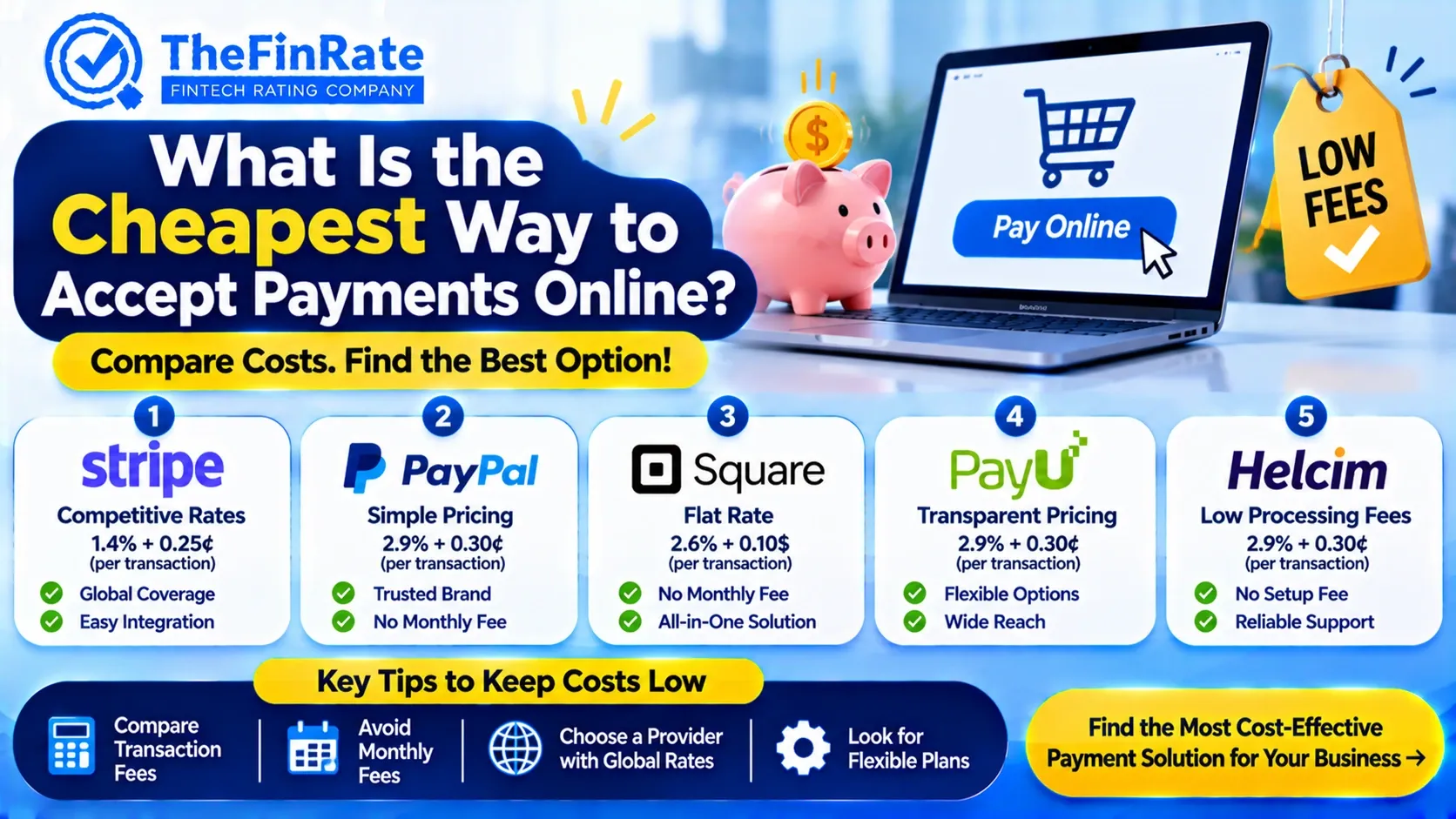
Accepting payments online is essential for businesses, freelancers, ecommerce stores, and service providers. However, payment processing fees can reduce profits, especially for small businesses that handle frequent transactions. Finding an affordable payment method helps businesses collect money conveniently without spending too much on processing charges.
So, what is the cheapest way to accept payments online?
The answer depends on your location, transaction volume, customer preferences, and business requirements. In India, direct UPI payments and bank transfers can be economical options for eligible transactions. Businesses that need website checkout, automated payments, or international transactions may benefit from comparing different payment gateway providers.
This guide explores affordable online payment methods, their costs, advantages, and how to choose the right solution for your business in 2026.
Why Businesses Should Look for Affordable Online Payment Methods
Every payment method comes with different costs, features, and limitations. While some options allow businesses to receive money with minimal transaction charges, others provide additional services such as automated checkout, fraud protection, recurring billing, and payment reporting.
Choosing an affordable payment solution can help businesses:
- Reduce transaction processing expenses
- Improve profit margins
- Offer convenient payment options to customers
- Simplify payment collection
- Manage online transactions more efficiently
- Support business growth without unnecessary payment costs
However, the lowest transaction fee is not always the best choice. Businesses should also consider security, reliability, settlement time, customer experience, and integration requirements.
7 Cheapest Ways to Accept Payments Online
Here are seven payment methods businesses can consider when looking for affordable ways to collect payments online.
1. Direct UPI Payments
Unified Payments Interface (UPI) is one of the most accessible payment methods in India. Businesses can receive payments directly through a UPI ID or QR code without necessarily using a traditional payment gateway.
Customers can scan a QR code or enter a UPI ID through a supported payment application to complete a transaction.
Advantages:
- Generally zero MDR for eligible UPI transactions under India's applicable rules
- Quick payment confirmation
- Convenient for customers
- No physical card machine required
- Suitable for freelancers and small businesses
Limitations:
- Direct UPI collection may not provide a complete website checkout experience
- Automated reconciliation may require additional tools
- International payment acceptance is limited
- Businesses must follow applicable merchant payment rules
Best for: Freelancers, consultants, local businesses, and small merchants that primarily serve Indian customers.
2. Bank Transfers
Bank transfers are another affordable way to accept online payments. Customers can transfer money directly to a business bank account through NEFT, IMPS, or other supported banking services.
This method is particularly useful for businesses that receive larger invoices or work with other companies.
Advantages:
- Direct account-to-account payments
- Useful for high-value transactions
- No traditional card gateway required
- Convenient for B2B payments
Limitations:
- Customers may need to enter bank details manually
- Payment confirmation and reconciliation can require additional work
- Bank charges may apply depending on the account and transfer method
Best for: Consultants, wholesalers, agencies, and businesses handling B2B invoices.
3. Payment Links
Payment links allow businesses to collect money without building a complete ecommerce website. A merchant creates a payment link and shares it with customers through email, WhatsApp, SMS, or social media.
Customers open the link and complete payment using the methods supported by the provider.
Many payment service providers offer payment links as part of their business payment solutions.
Advantages:
- No dedicated website checkout required
- Easy to share with customers
- Supports remote payment collection
- Useful for service bookings and invoices
- Can support multiple payment methods
Limitations:
- Transaction fees may apply
- Features and pricing vary by provider
- Some advanced options may require additional charges
Best for: Small businesses, online sellers, freelancers, and service providers.
4. Payment Gateways
A payment gateway allows businesses to accept payments directly through websites, mobile applications, and ecommerce stores.
Customers can select a payment method at checkout and complete transactions through the gateway's payment interface.
Examples of providers operating in the Indian market include Razorpay, Cashfree Payments, PayU, and other payment service providers.
Advantages:
- Website and app payment integration
- Multiple payment methods
- Automated transaction records
- Checkout customization
- Additional fraud prevention and reporting features, depending on the provider
Limitations:
- Transaction processing fees may apply
- Some providers charge additional service fees
- International card processing may cost more
- Merchant verification and onboarding are required
Best for: Ecommerce businesses, online stores, subscription businesses, and growing companies.
Businesses can explore TheFinRate's payment gateway directory to discover different payment solutions and compare their capabilities.
5. UPI Payment Links and QR Codes
UPI QR codes and payment links can make digital payment collection easier for merchants that sell through social media, messaging platforms, or physical stores.
A merchant can display a QR code or share a payment link so customers can complete transactions using supported UPI applications.
The cost depends on whether the merchant uses direct UPI collection or a third-party service that charges for additional features.
Advantages:
- Convenient for mobile payments
- Simple customer experience
- Useful for offline and online sales
- Can reduce dependence on card processing
Limitations:
- Third-party services may charge fees
- Direct collection may offer fewer automation features
- Payment reconciliation should be managed carefully
Best for: Small retailers, home businesses, social commerce sellers, and local service providers.
6. Digital Wallet Payments
Digital wallets allow customers to make payments using stored payment credentials or wallet balances, depending on the provider and country.
They can improve checkout convenience, particularly for mobile-first customers.
Advantages:
- Faster checkout for supported customers
- Convenient payment experience
- May support international customers
- Can reduce repeated entry of payment details
Limitations:
- Fees depend on the wallet and processing arrangement
- Availability varies by country
- Businesses may need a payment gateway integration
Best for: Ecommerce stores, digital businesses, and companies serving customers who prefer wallet-based payments.
Learn more about payment providers and the different payment options they support.
7. International Payment Solutions
Businesses selling products or services to customers overseas need payment solutions that support international cards and currencies.
International payment processing can involve several charges, including transaction fees, currency conversion markups, cross-border fees, and settlement costs.
Advantages:
- Accept payments from overseas customers
- Support international business expansion
- Provide multiple payment methods
- Simplify cross-border payment collection
Limitations:
- Foreign exchange charges may apply
- International card fees can be higher
- Settlement times vary
- Additional compliance and verification requirements may apply
Best for: Exporters, SaaS companies, ecommerce stores, and businesses serving international customers.
Comparison of Online Payment Methods
|
Payment method |
Cost considerations |
Best use |
|---|---|---|
|
Direct UPI |
Generally zero MDR for eligible transactions |
Small Indian businesses |
|
Bank transfer |
Bank-dependent charges |
B2B invoices |
|
Payment links |
Provider-dependent transaction fees |
Remote collections |
|
Payment gateway |
Processing and additional service fees |
Ecommerce websites |
|
UPI QR code |
Depends on collection arrangement |
Retail and social commerce |
|
Digital wallets |
Wallet and provider fees |
Mobile-friendly checkout |
|
International payments |
Processing and currency conversion fees |
Global customers |
Actual charges depend on the provider, merchant category, transaction type, and applicable regulations. Always confirm the latest pricing before signing up.
How to Choose the Cheapest Payment Gateway
If your business requires a payment gateway instead of direct payment collection, compare more than the advertised transaction rate.
1. Compare Transaction Fees
Check the charges for domestic cards, international cards, UPI, net banking, and other supported payment methods. Some providers have different pricing for different transaction categories.
2. Check Setup and Monthly Fees
Some payment services may have setup costs, monthly subscriptions, or additional charges for premium features. Understand the complete pricing structure before choosing a provider.
3. Review Settlement Charges
Find out how quickly the provider settles payments into your business bank account. Check whether faster settlements or special settlement arrangements involve additional costs.
4. Evaluate Security Features
Payment security is essential for protecting customer information and business revenue. Review encryption, fraud monitoring, access controls, and PCI DSS-related responsibilities.
5. Check Refund and Chargeback Fees
Refund processing and chargebacks can create additional expenses. Understand the provider's refund policy, dispute handling process, and applicable fees.
6. Consider Integration Requirements
Choose a payment solution that works with your website, ecommerce platform, accounting software, and other business systems.
For more information, explore TheFinRate's payment gateway reviews and compare providers based on their features and business suitability.
How to Reduce Online Payment Processing Costs
Businesses can reduce payment expenses by following a few practical steps.
- Offer UPI where suitable: Indian merchants can encourage eligible customers to use UPI.
- Compare providers regularly: Review transaction charges and additional service costs.
- Avoid unnecessary premium features: Select only the services your business actually needs.
- Optimize payment collection: Use payment links or automated invoices to reduce manual work.
- Monitor failed transactions: Identify payment failures and improve the checkout process.
- Review international charges: Compare foreign exchange rates and cross-border fees before accepting overseas payments.
- Negotiate pricing: Businesses with higher transaction volumes may qualify for customized commercial terms.
Which Payment Method Is Best for Different Businesses?
The cheapest payment method depends on how your business operates.
|
Business type |
Payment method to consider |
|---|---|
|
Freelancer |
Direct UPI or bank transfer |
|
Small Indian business |
UPI QR code or payment link |
|
Ecommerce store |
Payment gateway |
|
B2B company |
Bank transfer and payment links |
|
Subscription business |
Gateway with recurring billing |
|
International ecommerce |
Cross-border payment provider |
|
High-risk business |
Specialist merchant account and gateway |
A business may also combine multiple payment methods to provide flexibility without relying on a single provider.
Frequently Asked Questions
- What is the cheapest way to accept payments online?
For eligible domestic transactions in India, direct UPI payments are generally among the lowest-cost options because they have zero merchant discount rate under applicable rules. Bank transfers can also be economical. Businesses needing website checkout may require a payment gateway.
- Can I accept online payments without a payment gateway?
Yes. Businesses can accept payments through direct UPI, bank transfers, and other supported payment collection methods. However, a payment gateway is useful for automated website checkout and integrated payment processing.
- Are UPI payments free for businesses?
Eligible UPI transactions generally have zero MDR in India under the applicable framework. However, businesses should check whether third-party payment services or additional features carry separate charges.
- Can small businesses accept payments through WhatsApp?
Yes. Businesses can share UPI details, QR codes, or payment links through WhatsApp. Customers can use the available payment method to complete their transactions.
- Are international online payments more expensive?
They can be. International transactions may involve processing fees, currency conversion markups, cross-border charges, and settlement costs. Businesses should compare the total cost rather than only the advertised transaction rate.
- Do payment gateways charge monthly fees?
Some providers offer plans without monthly platform fees, while others charge subscriptions or additional fees for premium features. Review the provider's current pricing terms before applying.
Conclusion
Finding the cheapest way to accept payments online is important for businesses that want to control expenses and protect profit margins. In India, direct UPI payments and bank transfers can be economical for eligible transactions, while payment links and gateways provide additional convenience and automation.
The right choice depends on your transaction volume, business model, customer location, and payment requirements. Instead of selecting a provider based only on its advertised transaction fee, compare processing costs, settlement terms, security, integrations, and customer support.
Explore TheFinRate to discover payment gateways, merchant account providers, and payment processing solutions for your business.
Comments
No comments yet. Be the first to share your thoughts.
Leave a comment