
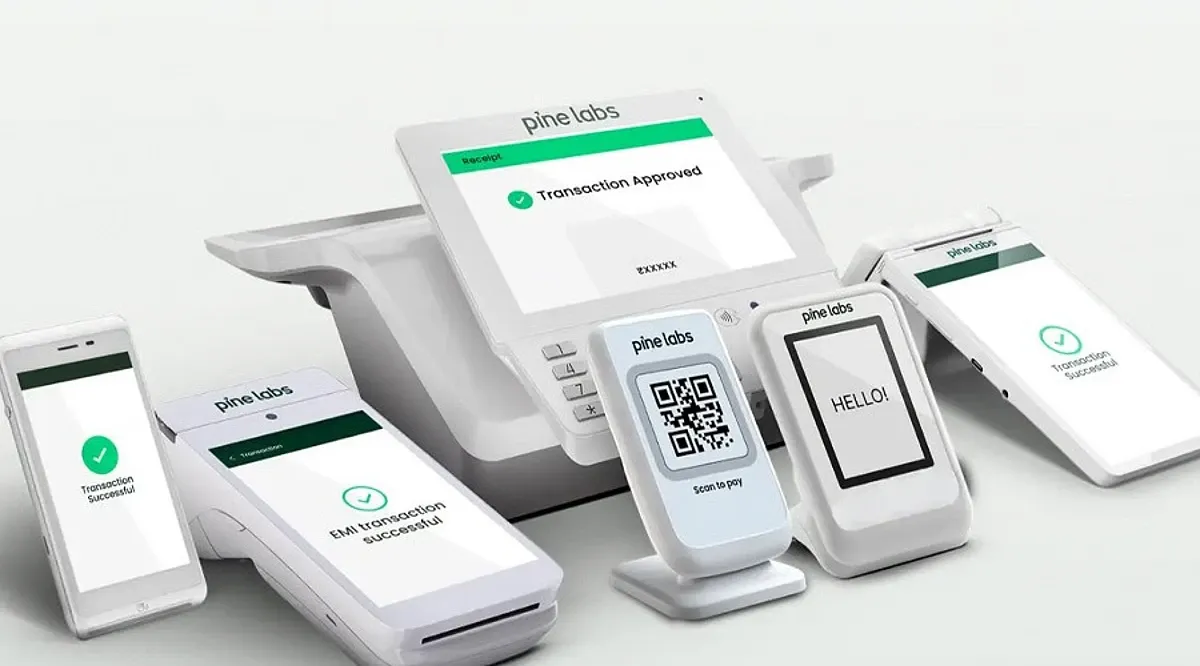
Guide analyzes merchant sales and payment data through natural language, while the marketer agent creates and launches advertising campaigns with merchant approval. Both tools are integrated into Pine Labs One.
Pine Labs has expanded its Agentic Org platform with two artificial intelligence (AI) agents designed to help small businesses manage everyday operations. The new tools, Guide and Marketer Agent, bring business intelligence and digital marketing capabilities into the company's merchant operating app, Pine Labs One.
Announced on 25 November 2026, the agents are being rolled out to millions of merchants across India. They target small and medium-sized businesses (SMBs) that often lack dedicated teams for data analysis, digital advertising, and campaign management.
The launch also marks an expansion of Pine Labs' collaboration with Google Cloud. Marketer Agent uses Google Gemini models to help merchants plan and execute advertising campaigns.
Rather than simply answering questions, the two agents are designed to perform practical business tasks. The guide helps merchants understand their performance data, while the marketer agent turns business objectives into advertising campaigns.
Guide brings sales and payment data into conversations.
The guide allows merchants to ask questions about their business using everyday language. They do not need to navigate multiple dashboards or understand complex reports to retrieve information.
The agent draws on several types of merchant data, including:
- Store-level sales and point-of-sale (POS) transactions.
- Payment and settlement information.
- Refunds and transaction activity.
- Value-added services (VAS) activations.
This is particularly relevant for merchants operating across multiple locations and payment channels. Businesses may receive payments through UPI, cards, and digital wallets, each with different transaction and settlement records.
The guide aims to bring this information together through a conversational interface. Merchants can ask questions about sales performance, payments, and settlement activity, then receive contextual insights from their structured business data.
For example, a merchant could use the agent to understand sales trends or investigate payment activity across different stores. This could reduce the time spent checking separate reports and systems.
However, the usefulness of these insights will depend on the accuracy, completeness, and availability of the underlying merchant data.
The marketer agent turns business goals into advertising campaigns.
Marketer Agent focuses on another challenge for small businesses: managing digital advertising without a dedicated marketing team.
Merchants can describe their business objectives in everyday language. The agent then helps translate those goals into advertising campaigns.
Its initial capabilities include:
- Keyword research and competitor keyword analysis.
- Advertising creative generation.
- Audience targeting.
- Campaign planning and setup.
- Campaign publishing after merchant approval.
The agent will initially support advertising on Google's platforms. Pine Labs plans to extend its capabilities to AI-powered discovery platforms as consumers increasingly use AI tools to find local businesses.
One important feature is the approval process. Merchants must review and approve campaigns before advertising expenditure is committed. Once approved, Marketer Agent can publish campaigns directly, removing the need to navigate Google Ads separately.
The approval requirement keeps merchants involved in decisions that affect their advertising budgets. It also distinguishes campaign preparation from authorization to spend.
Connecting advertising activity with actual store sales
Pine Labs also wants to address a long-standing challenge in digital marketing: understanding whether advertising generates real business revenue.
Advertising platforms can report clicks, impressions, and conversions. However, these metrics do not always show whether a campaign results in purchases at a physical store.
Pine Labs says its merchant relationships and transaction data can help connect advertising interactions with actual in-store transactions through privacy-preserving techniques.
This could give merchants a clearer view of how advertising activity translates into sales.
For smaller retailers, this type of analysis has traditionally been harder to access. Larger businesses often have dedicated marketing analytics teams and more advanced measurement systems.
The proposed connection between advertising and payment data could help narrow that gap. However, its practical value will depend on the accuracy of transaction matching, privacy safeguards, and the quality of campaign attribution.
Google Gemini supports the agent expansion.
Marketer Agent has been developed using Google Gemini models as part of Pine Labs' collaboration with Google Cloud.
The partnership was announced in September 2026 and focuses on advancing agentic commerce in India.
Amit Kumar, Managing Director of Google Cloud India, said the collaboration would help smaller businesses automate campaign management and pursue customer growth without extensive technical expertise.
The broader Agentic Org platform provides the infrastructure for agents to interpret requests, access relevant data and tools, and execute workflows.
Its permission and governance layer, Grantex, controls agent access and supports human oversight at critical stages. This is important because agents that can access business information and execute tasks require clear permissions and accountability.
The launch therefore combines task automation with approval controls. Still, merchants will need visibility into what information agents can access and what actions they can perform.
Pine Labs plans an Agent App Store.
Guide and Marketer Agent are the first two tools in a broader merchant-focused AI agent ecosystem.
Pine Labs plans to introduce an Agent App Store, a marketplace where merchants can access specialized agents for different business workflows.
The company plans to launch the marketplace first in Singapore during the Singapore FinTech Festival, followed by an India launch by 15 December 2026.
Pine Labs is also developing Market, an agent designed to manage advertising across multiple platforms. This would extend the company's approach beyond Google's advertising ecosystem.
The planned marketplace could give merchants access to specialized AI tools without requiring them to adopt separate enterprise software for every business function.
What the launch means for India's merchant ecosystem
The introduction of Guide and Marketer Agent reflects a wider shift in fintech and commerce technology. AI is moving beyond customer support and information retrieval towards systems that can complete operational tasks.
For small businesses, the potential benefit is practical. Owners could analyze sales, understand payment activity, and manage advertising from tools they already use.
However, adoption will depend on more than the availability of AI agents. Merchants will need reliable data, clear permissions, transparent advertising costs, and meaningful control over automated actions.
The approval process for the marketer agent is an important safeguard. Meanwhile, Grantex provides a governance layer for controlling agent access to tools and data.
The next phase will show whether these capabilities translate into measurable improvements for merchants. Campaign performance, sales attribution, data accuracy, and ease of use will be important indicators.
With Guide and Marketer Agent, Pine Labs is positioning its merchant app as more than a payments interface. It is seeking to make Pine Labs One an operating platform where merchants can understand business performance and act on that information.
The broader development is significant for India's SMB ecosystem: AI agents are beginning to bring capabilities once associated with larger retailers into everyday merchant workflows.
Comments
No comments yet. Be the first to share your thoughts.
Leave a comment